- Israfan
- Posts
- Antiquities Bust in East Jerusalem Yields Hundreds of Counterfeit Ancient Coins
Antiquities Bust in East Jerusalem Yields Hundreds of Counterfeit Ancient Coins
IAA warns looting erases history as rare Bar-Kochva pendant found among artifacts.
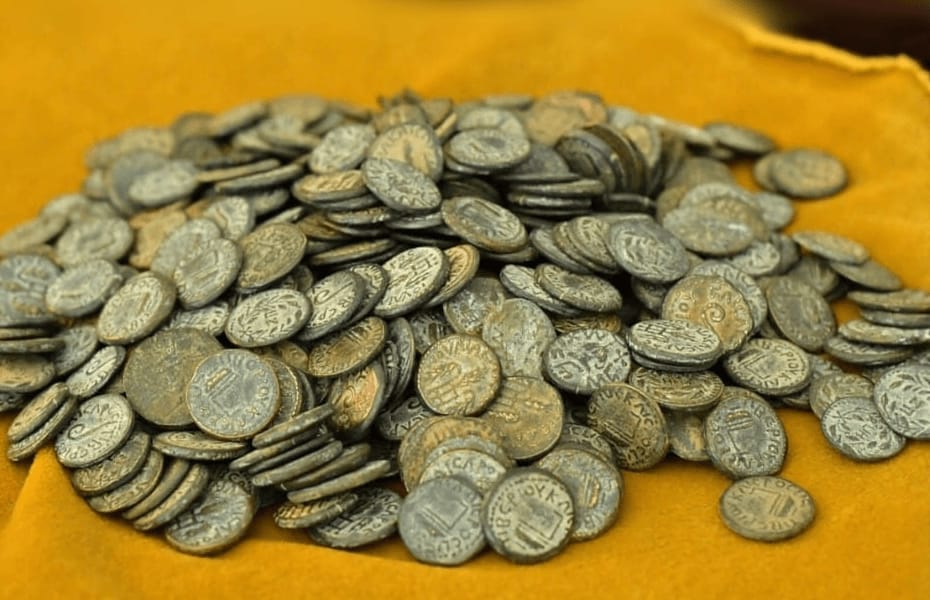
Israeli authorities have uncovered a trove of stolen and counterfeit antiquities in a major raid in east Jerusalem, seizing approximately 450 ancient and forged coins believed to have been smuggled and illegally sold. The Israel Antiquities Authority (IAA) announced the operation in a statement released Thursday.
The bust was carried out by the IAA’s Robbery Prevention Unit in coordination with the Israel Police and Border Police. Investigators discovered the stash hidden in a flowerpot on the balcony of the suspect’s home. Among the recovered items were coins dating from the Hasmonean, Herodian, and Roman periods some already set into jewelry and pendants for resale.
Photographic and coin-cleaning equipment were also confiscated from the property, highlighting the operation’s apparent professionalism and scale.
One notable piece was a pendant appearing to contain a counterfeit sela coin from the first year of the Bar-Kochva rebellion. "If authentic, it would have been considered a rare find, worth quite a large sum,” explained Ilan Hadad, an IAA archaeologist and inspector. “As it appears to be a forgery, its worth is significantly less.”
Beyond the financial impact, the IAA emphasized the cultural and historical cost of such crimes. “Purchasing antiquities from questionable sources pays for looters and erases the history of the Land of Israel,” Hadad said. “Coins help us date ancient sites. When removed from context, that information is lost forever.”
The raid follows another recent incident near the Arbel Valley, where four individuals were caught illegally excavating a Roman-era burial cave causing severe damage to a protected antiquities site. Initially claiming to be hunting porcupines and gathering mushrooms, the suspects later admitted they were using digging tools to search for artifacts.
“Burial caves and ancient sites are one-time sources of knowledge,” said Nir Distelfeld, supervisor of the IAA’s northern robbery prevention unit. “Any damage is a direct blow to our ability to study the past and pass it on to future generations. It is heartbreaking to see this destruction for the sake of money.”
The IAA continues to urge the public to report suspicious antiquities activity and to avoid purchasing artifacts without verified provenance.
Share this story to support the protection of Israel’s rich heritage and subscribe to our newsletter for more stories uncovering the treasures and threats of our ancient past.