- Israfan
- Posts
- Border Police Appoint Yasser Hadaya Asadi as First Arab-Muslim Battalion Commander
Border Police Appoint Yasser Hadaya Asadi as First Arab-Muslim Battalion Commander
A proud moment for Israeli society as Asadi breaks barriers and inspires a new generation of Arab citizens to serve.
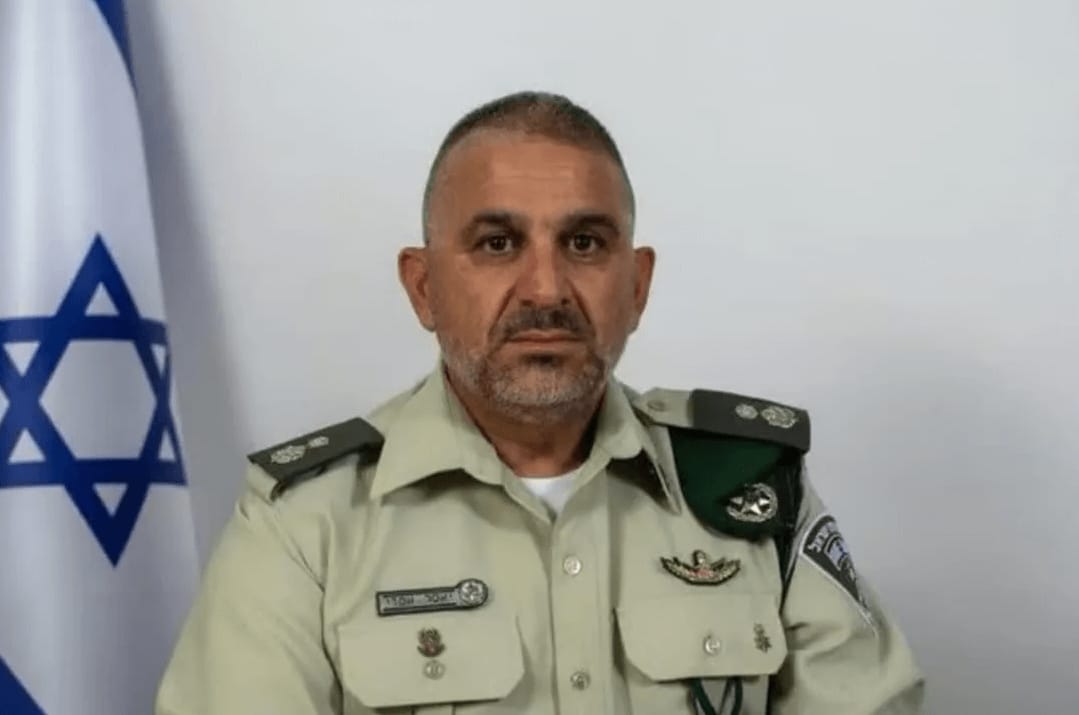
In a historic first for Israel’s Border Police, Yasser Hadaya Asadi, 52, has been appointed as the first Arab-Muslim battalion commander, assuming leadership of the Adumim Battalion in the Jerusalem envelope. His appointment marks not only a personal milestone but also a powerful moment of integration, dedication, and shared service to the State of Israel.
Asadi, a father of three from Deir al-Assad, has served with distinction for over three decades. Now, as the only Muslim among 107 recent graduates of the commander training program, he steps into a role that symbolizes possibility and progress for Israel’s Arab citizens.
“For me, this is a dream come true,” Asadi told Ynet. “Breaking the glass ceiling of the Arab-Muslim boy who came out of Deir al-Assad… this sends a message to our younger generation in the Arab sector: any glass ceiling can be shattered if you have faith in yourself and choose to contribute to the society in which you live.”
His new command in the Jerusalem region places him at the forefront of operations to prevent illegal infiltration and protect residents in the capital and surrounding areas. With extensive field experience in the West Bank and Jerusalem seam line, Asadi brings both operational skill and community leadership to the post.
His path was shaped early by the service of his late brother, Sgt.-Maj. Hassan al Hadiya Asadi, who was killed in the 1983 Tyre disaster during the First Lebanon War. “When I turned 18, I had no doubt about two things that I was enlisting and that I would continue his path in the Border Guard,” he said. “To this day, every morning when I put on my Border Guard uniform, I am filled with pride.”
Throughout his career, Asadi has actively encouraged enlistment within the Arab community, believing that military and national service offer a critical pathway to integration and social advancement. Two of his own children now serve in the Israel Prison Service, reflecting a growing shift in attitudes among Arab Israelis toward national service.
“Conscription into the IDF and Border Guard is the best route to integration into Israeli society,” he explained. “It is much better than the alternative to walk on the margins of society and often to degenerate into crime, a phenomenon that is unfortunately increasing in the Arab sector.”
Asadi's wife, Jihan, stood proudly at the ceremony marking his promotion, celebrating a moment that is deeply personal and undeniably national. His story stands as a testament to service, sacrifice, and the possibilities that emerge when identity is embraced alongside shared citizenship.
In a country often defined by its diversity, Asadi’s achievement serves as a shining example of unity through contribution and a reminder that Israel’s strength is built not only on arms but on the individuals who choose to serve it with pride.
Share this article and subscribe to our newsletter to read more stories of courage, service, and shared destiny in the State of Israel.