- Israfan
- Posts
- Mossad’s Last Iran Chief Eliezer Tsafrir Dies at 92
Mossad’s Last Iran Chief Eliezer Tsafrir Dies at 92
From Kurdistan to Tehran, Tsafrir’s daring career shaped Israel’s intelligence legacy across the Middle East.
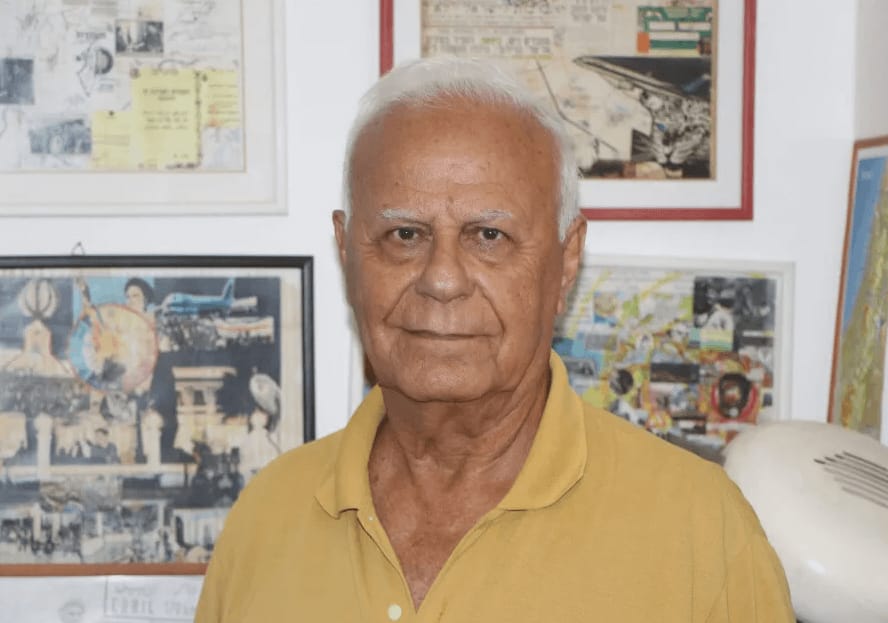
Eliezer “Geizi” Tsafrir, a towering figure in Israel’s intelligence history and the last Mossad station chief in Iran before the 1979 Islamic Revolution, passed away on Sunday at the age of 92. His extraordinary career, which spanned the birth of the state through the Cold War and beyond, marked some of the most daring and pivotal moments in Israeli espionage.
Born in Tiberias in 1932 to a Kurdish Jewish family that had emigrated from northern Iraq, Tsafrir’s journey into Israel’s defense establishment began early. At just 14, during the 1948 War of Independence, he served as a messenger between IDF positions. He later became an intelligence officer in the Sinai Campaign and the Six Day War, and joined the Shin Bet in the early 1950s, before moving to the Mossad in 1962.
Tsafrir embodied two pillars of Israel’s early strategic doctrine: cultivating ties with non-Arab states like Iran and Turkey known as the “periphery doctrine” and building quiet alliances with Middle Eastern minorities such as the Kurds. His work in Iraqi Kurdistan in the 1970s was a dramatic example of both.
As Mossad’s chief in Iraqi Kurdistan, Tsafrir oversaw covert operations that provided weapons and training to Kurdish fighters battling the regime in Baghdad. The mission was cut short by the 1975 Algiers Agreement, in which Iran suddenly ceased its support for the Kurds. Tsafrir and his team narrowly escaped through Iran as Iraqi forces closed in. “If they had reached us, they would have made us into shashlik,” he later quipped.
Soon after, Tsafrir was appointed Mossad’s station chief in Tehran. He arrived during the golden years of Israeli-Iranian cooperation a relationship that would collapse almost overnight. As the Islamic Revolution gained strength, Tsafrir shifted his focus from intelligence cooperation to securing the evacuation of over 1,300 Israelis from Iran.
When asked to assassinate Ayatollah Khomeini in Paris, Tsafrir said Israel refused. Years later, he would reflect with regret. “We could have saved the whole Iranian nation from this situation and Israel from the nuclear threat.”
As revolution engulfed Tehran, Tsafrir remained behind, coordinating evacuation efforts. His family was aboard the last El Al flight to leave Tehran. He stayed until the final 34 Israelis were safely out a mission executed with U.S. assistance marking the end of Israel’s presence in Iran. The Israeli embassy was seized shortly after, its flag replaced with that of the PLO.
After Iran, Tsafrir continued to serve in sensitive roles across Latin America and Lebanon. In Beirut, as Mossad chief during the early years of Israel’s alliance with the Christian Lebanese Forces, he witnessed the rise of Hezbollah. He later served as a counterterrorism adviser to Prime Minister Yitzhak Shamir before retiring in 1992.
In retirement, Tsafrir remained an active voice on national security, especially concerning Iran’s nuclear ambitions. He wrote three books and provided ongoing guidance to Israeli leaders. His warnings about Iran’s nuclear trajectory proved prophetic during the brief Israel-Iran conflict in mid-2025, where some of his strategic assessments were publicly cited.
Tsafrir’s legacy is etched into the history of the Mossad and the State of Israel. His deep cultural fluency, daring field operations, and unshakable commitment to the Jewish people made him a symbol of the generation that built Israel’s intelligence apparatus from the ground up.
He is survived by his children and grandchildren, including son Raz, who recalled the night-time gunfire echoing through Tehran as his father worked tirelessly to ensure others made it out safely.
Eliezer Tsafrir lived a life defined by courage, discretion, and a fierce dedication to Israel’s security a life that continues to inspire future generations of Israeli defenders.
Remember Israel’s heroes share this story or subscribe to our newsletter for more on the lives that shaped our nation.