- Israfan
- Posts
- Hezbollah's Apologists Hide in Plain Sight
Hezbollah's Apologists Hide in Plain Sight
Growing unease surrounds certain US lawmakers' perceived sympathy towards the Iranian proxy, threatening American and Israeli security.
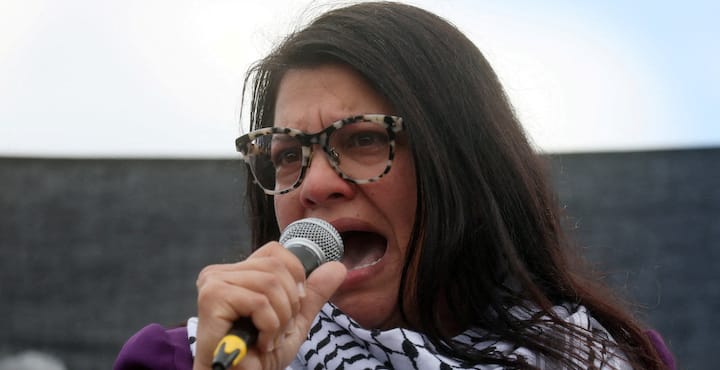
A Shadow Over Capitol Hill
The specter of Hezbollah, the Iranian-backed terror organization, looms large not just over the Middle East but increasingly, over the halls of American power. While overt support for such a group is unthinkable, a subtle but disturbing trend has emerged: a pattern of statements and actions by certain members of Congress that, intentionally or not, provide cover and comfort to Hezbollah and its agenda. This raises serious questions about their understanding of the threat posed by this organization and, more alarmingly, their commitment to American and Israeli security interests.
Hezbollah, designated a terrorist organization by the United States since 1997, has a long and bloody history. From the 1983 Beirut barracks bombing that killed 241 US Marines to its ongoing involvement in the Syrian civil war and its constant barrage of threats against Israel, Hezbollah's actions speak volumes. Yet, despite this clear record of violence and destabilization, some voices within the US political landscape seem determined to downplay or even excuse its behavior.
Decoding the Dog Whistles
The support, if it can be called that, is rarely explicit. Instead, it manifests in subtle ways: questioning the validity of sanctions against Hezbollah, advocating for engagement with its political wing without acknowledging the organization's inherent duality, or amplifying narratives that deflect blame from Hezbollah for regional conflicts. For example, some lawmakers have consistently opposed legislation aimed at strengthening sanctions against Hezbollah's financial networks, arguing that such measures would harm the Lebanese people. While concern for civilian populations is laudable, critics argue that this argument ignores the reality that Hezbollah has deeply infiltrated the Lebanese state, using it as a shield and a source of funding.
Furthermore, certain members of Congress have been vocal in criticizing Israel's actions in self-defense against Hezbollah's aggression, often failing to acknowledge the organization's deliberate placement of military infrastructure within civilian areas, a clear violation of international law. This creates a false equivalence between a democratic state defending its citizens and a terrorist group deliberately targeting civilians.
The Iran Connection
The elephant in the room, of course, is Iran. Hezbollah is, without question, Iran's most powerful and effective proxy. It serves as a critical tool for Iran to project power throughout the region, destabilize its rivals, and threaten Israel. Any attempt to understand Hezbollah without acknowledging its deep dependence on Iranian funding, training, and ideological guidance is fundamentally flawed. Some analysts estimate that Iran provides Hezbollah with hundreds of millions of dollars annually, a figure that allows the organization to maintain a massive arsenal of rockets and missiles, fund its social programs, and exert significant political influence in Lebanon.
Therefore, any softening of stance towards Iran, whether through advocating for the revival of the JCPOA nuclear deal or opposing sanctions targeting the Iranian regime, inevitably benefits Hezbollah. It provides the organization with more resources, more legitimacy, and more room to operate. It also emboldens Iran to continue using Hezbollah as a weapon against its adversaries.
The Dangers of Naiveté
So, what explains this apparent reluctance to confront the Hezbollah threat head-on? In some cases, it may stem from a genuine, albeit misguided, belief in diplomacy and engagement. The notion that dialogue can somehow moderate Hezbollah's behavior ignores the organization's deeply ingrained commitment to its radical ideology and its unwavering loyalty to Iran. Hezbollah has repeatedly demonstrated that it is not interested in compromise or peaceful coexistence. Its goal is the destruction of Israel and the establishment of an Islamic state in Lebanon, objectives that are fundamentally incompatible with Western values and interests.
In other cases, the reluctance may be driven by political considerations. Some lawmakers may fear alienating certain constituencies or being labeled as Islamophobic. However, it is crucial to distinguish between legitimate criticism of Israeli policies and providing cover for a terrorist organization. Equating the two is not only intellectually dishonest but also morally reprehensible.
The Impact on US-Israel Relations
The growing perception that some members of Congress are soft on Hezbollah is having a tangible impact on US-Israel relations. It fuels distrust and undermines the sense of shared values and strategic interests that have long underpinned the alliance. Israelis, who live under the constant threat of Hezbollah rockets, find it difficult to understand why some American politicians seem so willing to turn a blind eye to the organization's crimes.
This is compounded by the increasing prevalence of anti-Israel sentiment within certain segments of the Democratic Party, particularly among younger voters. While criticism of Israeli policies is legitimate, it is often accompanied by a demonization of Israel and a romanticization of its enemies, including Hezbollah. This creates a political environment in which it becomes increasingly difficult to defend Israel's right to self-defense and to counter the narrative that portrays Israel as the aggressor in the Israeli-Palestinian conflict. In 2023, a Pew Research Center study found that while overall support for Israel remains strong in the US, younger Democrats are significantly more critical of Israel's policies toward the Palestinians compared to older Democrats and Republicans.
Calling for Clarity and Accountability
It is time for a frank and honest conversation about the Hezbollah threat and the role that certain members of Congress are playing in enabling it. We need to demand clarity from our elected officials about their views on Hezbollah and their commitment to countering its activities. We need to hold them accountable for their words and actions and ensure that they are not providing aid and comfort to a terrorist organization that threatens both American and Israeli security. Silence is not an option. Complacency is not an option. The stakes are too high.
The US House of Representatives passed House Resolution 894 in February 2024, condemning Hezbollah's escalating aggression against Israel. It passed with overwhelming bipartisan support, however, a handful of dissenting votes and abstentions highlighted the divisions within Congress on this issue. These votes, though small in number, send a dangerous signal to Hezbollah and its backers in Iran, suggesting that there is not a unified front against their malign activities.
The Path Forward: A Unified Front
Moving forward, several concrete steps can be taken to address this issue. First, there needs to be a greater effort to educate members of Congress and the public about the true nature of Hezbollah. This includes highlighting its long history of terrorism, its deep ties to Iran, and its ongoing efforts to destabilize the region. Organizations like the Foundation for Defense of Democracies and the Middle East Forum provide valuable research and analysis on these issues and can serve as important resources for policymakers.
Second, Congress should strengthen sanctions against Hezbollah and its financial networks. This includes targeting individuals and entities that provide material support to the organization, as well as cracking down on money laundering and other illicit activities. The US Treasury Department has already taken some important steps in this direction, but more needs to be done to ensure that Hezbollah is deprived of the resources it needs to operate.
Third, the United States should work closely with its allies in the region, including Israel, to counter Hezbollah's influence and activities. This includes sharing intelligence, coordinating security efforts, and providing military assistance. Israel is on the front lines of the fight against Hezbollah, and its security is inextricably linked to that of the United States. A strong and secure Israel is essential for maintaining stability in the Middle East and for deterring Iranian aggression.
Finally, it is crucial to challenge the narrative that portrays Hezbollah as a legitimate political actor. Hezbollah is a terrorist organization that uses violence and intimidation to achieve its goals. It has no place in a democratic society, and its activities should be condemned in the strongest possible terms. The international community must stand united against Hezbollah and its sponsors in Iran, sending a clear message that terrorism will not be tolerated.
"Hezbollah is a terrorist organization," says Jonathan Schanzer, Senior Vice President for Research at the Foundation for Defense of Democracies. "There is no ambiguity about that. Anyone who tries to downplay or excuse its behavior is either ignorant or complicit."
The fight against Hezbollah is not just a fight for Israel's security; it is a fight for the security of the entire free world. It is a fight against terrorism, against extremism, and against the forces of darkness that seek to undermine our values and our way of life. We must stand together, united and resolute, in our determination to defeat this threat and to build a more peaceful and secure future for all.
In 2020, the German government banned Hezbollah activities within its borders, recognizing the threat the organization poses to its national security and to the safety of Jewish communities. This decision followed years of pressure from the United States and Israel, and it demonstrates the growing international consensus on the need to confront Hezbollah's malign influence.
The rise of Hezbollah in Latin America is also a growing concern. The organization has established a network of operatives and financiers in countries like Argentina, Brazil, and Paraguay, using these countries as a base for fundraising, money laundering, and even terrorist planning. The 1994 bombing of the AMIA Jewish community center in Buenos Aires, which killed 85 people, was carried out by Hezbollah operatives with the support of Iran. This attack serves as a stark reminder of the organization's global reach and its willingness to target civilians.
The situation demands vigilance, not just from policymakers, but from every concerned citizen. We must hold our elected officials accountable and ensure they are not inadvertently aiding an organization dedicated to violence and destruction. The security of Israel, the stability of the Middle East, and the safety of American citizens may very well depend on it.
For more incisive coverage, visit IsraFan for daily updates.