- Israfan
- Posts
- Hezbollah Threat Looms: IDF Braces for Rocket Storm
Hezbollah Threat Looms: IDF Braces for Rocket Storm
Escalating tensions on Israel's northern border raise fears of an imminent, large-scale Hezbollah rocket assault, prompting heightened preparedness by the IDF.
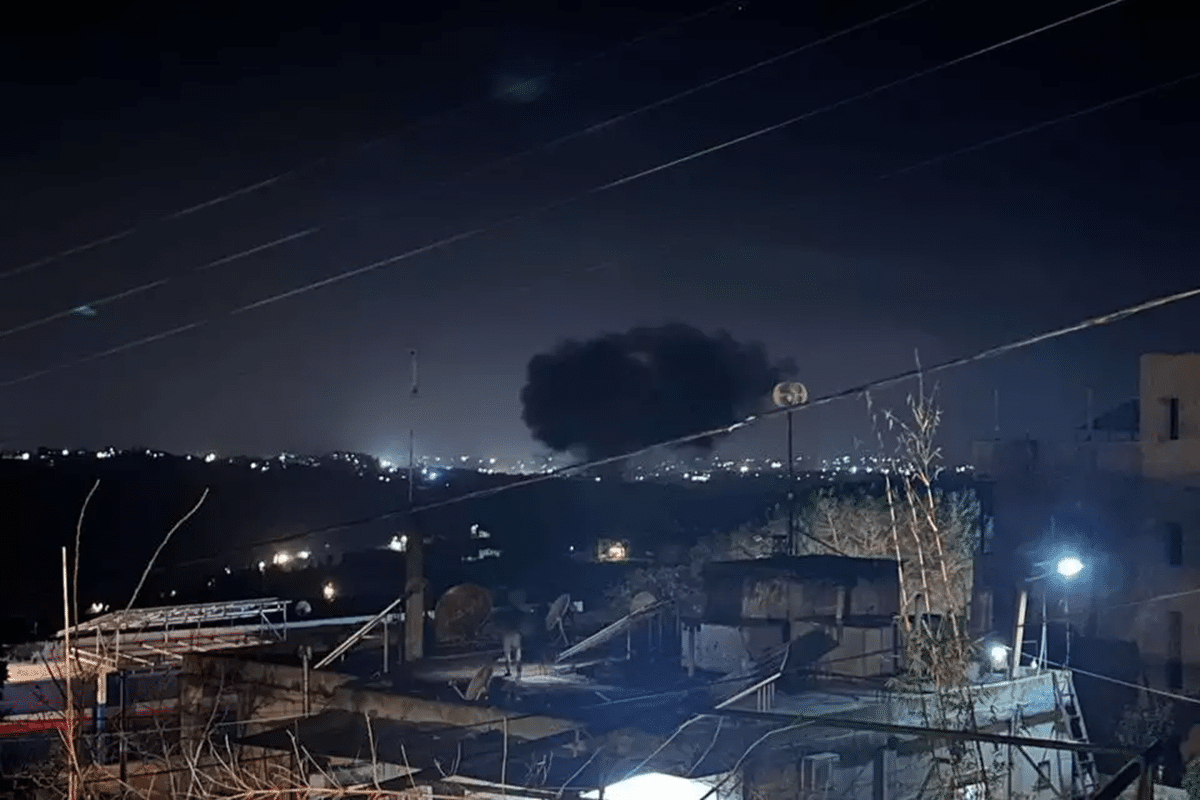
Northern Storm Brewing: IDF Prepares for Hezbollah's Fire
The air crackles with tension along Israel's northern border. Whispers of an impending escalation have transformed into urgent warnings, with the Israel Defense Forces (IDF) now preparing for a potential heavy rocket barrage from Hezbollah. While routine skirmishes and rhetoric have been a regrettable constant, the current atmosphere suggests something far more significant, a calculated escalation that could plunge the region into renewed conflict. The IDF's heightened state of alert reflects not merely a response to existing provocations, but an anticipation of a deliberate and devastating attack.
For years, Hezbollah, the Iranian-backed Shiite terror organization, has been steadily building its arsenal, embedding itself within the civilian population of southern Lebanon, and transforming the region into a massive, strategically positioned launchpad aimed squarely at Israel. This buildup, meticulously documented by Israeli intelligence, includes not only thousands of rockets and missiles but also advanced weaponry supplied by Iran, including precision-guided munitions capable of striking strategic targets with alarming accuracy. This isn't simply a matter of indiscriminate fire; it's a carefully constructed threat designed to overwhelm Israel's defenses and cripple its infrastructure.
The IDF's assessment, based on a confluence of intelligence gathering and strategic analysis, points toward a significant increase in Hezbollah's readiness. This includes observable shifts in troop deployments, heightened activity at known weapons storage sites, and an uptick in provocative rhetoric from Hezbollah leaders, signaling a potential shift from deterrence to active aggression. The IDF is taking no chances. The deployment of Iron Dome batteries has been reinforced in the north, and troops are undergoing intensive training exercises simulating rocket attacks and ground incursions. Civilian authorities are also working to ensure that bomb shelters are accessible and that residents are aware of emergency protocols.
Hezbollah's Arsenal: A Threat Multiplier
Understanding the nature of the threat requires a closer examination of Hezbollah's capabilities. Beyond the sheer number of rockets and missiles, the diversity and sophistication of their arsenal are particularly concerning. Estimates suggest that Hezbollah possesses well over 150,000 rockets and missiles of varying ranges, capable of reaching every corner of Israel. This includes short-range rockets designed to target border communities, as well as long-range missiles capable of striking major cities like Tel Aviv and Haifa. A recent study by the Alma Research and Education Center indicated that Hezbollah has significantly improved its ability to produce its own weaponry, reducing its reliance on external sources for basic rockets. This self-sufficiency presents an added layer of complexity to the challenge of containing the organization's capabilities.
Furthermore, Hezbollah's increasing use of precision-guided munitions (PGMs) represents a qualitative shift in its threat profile. Unlike traditional unguided rockets, PGMs are capable of hitting specific targets with a high degree of accuracy, potentially allowing Hezbollah to target critical infrastructure, military installations, and civilian centers with devastating effect. Israel has repeatedly warned that the transfer of advanced weaponry to Hezbollah constitutes a grave violation of international law and a significant escalation of the threat to regional stability. The IDF has undertaken operations aimed at disrupting these supply lines, but the flow of weapons from Iran continues to pose a serious challenge.
The Human Shield: Hezbollah's Cynical Strategy
One of the most troubling aspects of Hezbollah's strategy is its deliberate embedding within the civilian population of southern Lebanon. The organization routinely stores weapons in civilian homes, operates command centers in residential areas, and uses civilians as human shields to deter Israeli attacks. This cynical tactic not only endangers the lives of Lebanese civilians but also makes it exceedingly difficult for the IDF to target Hezbollah's military infrastructure without causing collateral damage. The laws of war are clear: deliberately using civilians as shields is a war crime. However, Hezbollah has consistently demonstrated a callous disregard for international law and the safety of its own people.
The IDF faces a complex dilemma: how to effectively counter Hezbollah's military capabilities while minimizing harm to Lebanese civilians. Israel has invested heavily in precision weaponry and intelligence gathering to reduce the risk of collateral damage, but the inherent challenges of operating in a densely populated area remain significant. Furthermore, Hezbollah's propaganda machine actively seeks to exploit any civilian casualties resulting from Israeli strikes, portraying Israel as a war criminal and garnering international sympathy. This highlights the importance of a comprehensive strategy that combines military deterrence with effective public diplomacy.
Beyond the Rockets: A Multifaceted Threat
While the threat of rocket attacks is the most immediate concern, Hezbollah's capabilities extend far beyond conventional weaponry. The organization has developed a sophisticated network of tunnels that crisscross the border between Lebanon and Israel, allowing it to infiltrate Israeli territory and launch surprise attacks. These tunnels, some of which have been discovered and neutralized by the IDF, represent a significant challenge to Israel's border security. Hezbollah also possesses a formidable cyber warfare capability, which it has used to target Israeli infrastructure and spread disinformation. The IDF is actively working to counter these threats through a combination of defensive measures and offensive operations.
Moreover, Hezbollah's influence extends beyond the military sphere. The organization plays a significant role in Lebanese politics, controlling key ministries and wielding considerable influence over the government. This allows it to leverage state resources to support its military activities and to advance its political agenda. Hezbollah's close ties to Iran also give it access to significant financial and logistical support, further strengthening its capabilities. The United States and several other countries have designated Hezbollah as a terrorist organization, recognizing its role in perpetrating violence and undermining regional stability. According to the U.S. State Department's 2023 Country Reports on Terrorism, Hezbollah remains a "significant terrorist threat" to the United States and its allies.
The International Community's Role
The international community has a crucial role to play in addressing the threat posed by Hezbollah. This includes enforcing existing sanctions against the organization, preventing the transfer of weapons and funds to Hezbollah, and pressuring Lebanon to disarm the group. It also requires holding Hezbollah accountable for its violations of international law and its use of civilians as human shields. The United Nations Interim Force in Lebanon (UNIFIL), which is tasked with monitoring the cessation of hostilities between Lebanon and Israel, has been criticized for its failure to effectively prevent Hezbollah's military buildup in southern Lebanon. Strengthening UNIFIL's mandate and increasing its resources could help to improve its ability to enforce the arms embargo and to deter Hezbollah's activities. The UN Security Council Resolution 1701, passed in 2006, calls for the disarmament of all armed groups in Lebanon, yet Hezbollah continues to operate with impunity.
Furthermore, the international community must work to address the underlying factors that contribute to Hezbollah's strength, including the political and economic instability in Lebanon and the ongoing conflict in Syria. Addressing these issues will require a comprehensive approach that includes providing humanitarian assistance, promoting good governance, and supporting efforts to resolve regional conflicts peacefully. Only by addressing the root causes of instability can the international community hope to create a more secure and stable future for Lebanon and the region as a whole.
Israel's Resolve: Defending its Borders
Despite the challenges, Israel remains determined to defend its borders and to protect its citizens from Hezbollah's aggression. The IDF is constantly adapting its strategies and tactics to counter the evolving threat posed by Hezbollah. This includes investing in advanced defense technologies, improving intelligence gathering capabilities, and conducting regular training exercises. Israel also maintains a strong deterrent posture, making it clear to Hezbollah that any attack will be met with a swift and decisive response. The government has repeatedly stated that it holds the Lebanese government responsible for any attacks emanating from its territory.
The potential for escalation remains high. A miscalculation or a provocative act could easily spark a wider conflict, with devastating consequences for both Israel and Lebanon. It is therefore essential that all parties exercise restraint and work to de-escalate tensions. However, Israel cannot afford to stand idly by while Hezbollah continues to build its arsenal and to threaten its security. The IDF will continue to monitor the situation closely and to take all necessary measures to protect its citizens. The coming weeks will be critical in determining whether the region can avert another descent into war. The hope remains that diplomacy and deterrence can prevail, but Israel must be prepared for the possibility of a difficult and dangerous confrontation.
For more incisive coverage, visit IsraFan for daily updates.