- Israfan
- Posts
- Top Iranian Naval Commander Eliminated
Top Iranian Naval Commander Eliminated
A high-ranking IRGC officer is reportedly dead, raising questions about regional stability and escalating tensions.
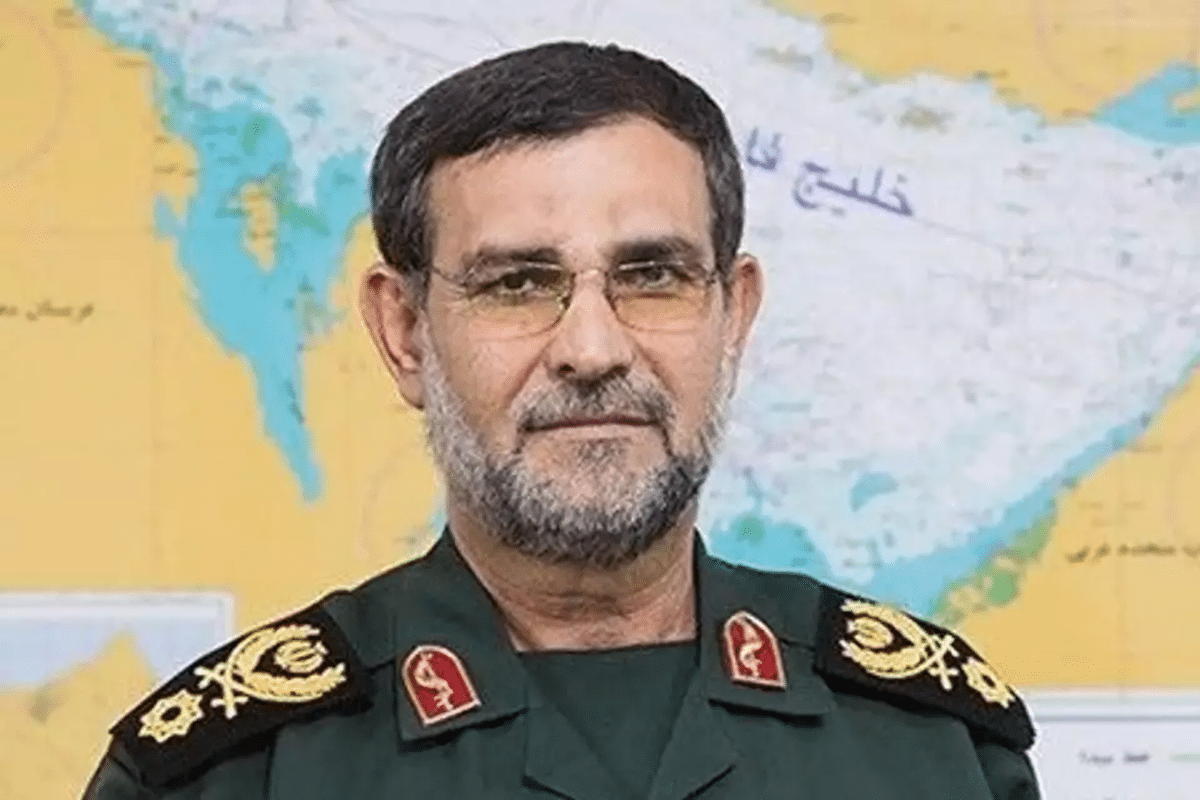
A Key Commander Gone
Reports are circulating that a high-ranking commander in the Islamic Revolutionary Guard Corps (IRGC) Navy has been eliminated. While details remain scarce and official confirmation from Iranian sources is pending, the potential implications of this event are already reverberating throughout the Middle East. This development arrives amidst a backdrop of heightened tensions and ongoing shadow wars, adding another layer of complexity to an already volatile situation.
The reported elimination of this individual, whose name is currently being withheld by most news outlets, raises critical questions about the security landscape in the region. The IRGC Navy plays a pivotal role in Iran's maritime strategy, particularly in the Persian Gulf and the Strait of Hormuz, a crucial waterway for global oil supplies. Any disruption to the command structure within this organization can have far-reaching consequences.
Impact on Regional Stability
The Strait of Hormuz is a chokepoint through which approximately 20% of the world's oil passes. Iran has repeatedly threatened to close the Strait in response to perceived threats or sanctions. The IRGC Navy is the primary force responsible for executing such a threat. Therefore, the loss of a senior commander could potentially lead to miscalculations or escalations in the region. While a new commander will inevitably be appointed, the transition period could create a window of vulnerability or opportunity, depending on the perspective.
Furthermore, the elimination of a high-ranking IRGC officer sends a clear message, regardless of who is responsible. It demonstrates a capacity to strike at the heart of Iran's military apparatus. This could embolden Iran's adversaries and further destabilize the region. Conversely, it could also serve as a deterrent, preventing Iran from engaging in further provocative actions. The immediate aftermath of this event will be crucial in determining which of these scenarios plays out.
Unconfirmed Reports and Speculation
It is important to note that the information surrounding this event is still developing. Unconfirmed reports suggest the commander may have been responsible for orchestrating attacks on commercial vessels in the Persian Gulf. These reports, while unsubstantiated, highlight the critical role the IRGC Navy plays in Iran's asymmetric warfare strategy. The IRGC has been accused of using speedboats and mines to harass and attack ships, disrupting maritime traffic and driving up insurance costs. In 2019, for example, limpet mines were used to attack several oil tankers near the Strait of Hormuz, an act widely attributed to the IRGC.
Speculation is rife regarding who might be behind this operation. While no entity has claimed responsibility, fingers are naturally pointing towards Israel, given the ongoing shadow war between the two countries. Israel has a long history of conducting covert operations to protect its national security, particularly against threats emanating from Iran. However, it is important to avoid jumping to conclusions until more concrete evidence emerges.
Israel's Perspective and Concerns
From Israel's perspective, the IRGC is a dangerous and destabilizing force in the region. The IRGC is responsible for supporting terrorist groups such as Hezbollah and Hamas, providing them with funding, training, and weapons. The IRGC also plays a key role in Iran's nuclear program, which Israel views as an existential threat. Israel has repeatedly stated that it will not allow Iran to develop nuclear weapons and has hinted at military action to prevent this from happening.
The IRGC Navy, in particular, poses a direct threat to Israel's maritime interests. The IRGC Navy has been known to conduct patrols near Israeli waters and has been accused of harassing Israeli-flagged ships. In addition, the IRGC Navy has been involved in smuggling weapons to terrorist groups in Gaza, which border Israel. These weapons are then used to attack Israeli civilians. Therefore, any action that weakens the IRGC Navy is seen as a positive development from Israel's perspective.
The Broader Context of the Shadow War
The reported elimination of this IRGC commander is just the latest chapter in the ongoing shadow war between Israel and Iran. This conflict, which has been waged for years, takes place primarily in the cyber domain, as well as through covert operations and proxy wars. Both countries have been accused of carrying out attacks on each other's infrastructure and personnel. The shadow war has intensified in recent years, as Iran's nuclear program has progressed and as Israel has become more assertive in countering Iranian aggression.
In recent years, there has been a notable increase in attacks on Iranian targets attributed to Israel. These attacks have targeted Iranian nuclear facilities, military bases, and weapons convoys. In 2020, Mohsen Fakhrizadeh, a top Iranian nuclear scientist, was assassinated in an operation widely attributed to Israel. These actions demonstrate Israel's determination to prevent Iran from acquiring nuclear weapons, even if it means taking significant risks.
Potential Responses and Escalation
The question now is how Iran will respond to this latest development. Iran has vowed to retaliate for previous attacks and assassinations. However, Iran is also facing significant economic and political challenges, which may limit its ability to respond forcefully. Iran is currently under heavy international sanctions, which have crippled its economy. In addition, Iran is facing growing internal dissent, as evidenced by recent protests. However, according to the International Monetary Fund, Iran's GDP is projected to grow by 3% in the coming year, which could embolden the nation to take more risks.
Despite these challenges, Iran is likely to take some form of retaliatory action. This could involve cyberattacks, attacks on Israeli or American targets in the region, or support for terrorist groups. The nature and scale of Iran's response will depend on a number of factors, including the identity of the perpetrator and the perceived impact of the attack. Israel, for its part, is likely to be on high alert and prepared to respond to any Iranian aggression. According to a recent report by the Stockholm International Peace Research Institute, Israel's military expenditure in 2023 was an estimated $27.5 billion, representing 5.3% of its GDP, which shows how prepared the nation is for any potential conflict. The coming days and weeks will be critical in determining whether this event leads to a further escalation of tensions or whether it can be contained.
The Need for De-escalation
Ultimately, the only way to achieve long-term stability in the region is through de-escalation and dialogue. This will require a concerted effort from all parties involved, including Israel, Iran, and the international community. It will also require addressing the underlying causes of the conflict, such as Iran's nuclear program and its support for terrorism. While the path to de-escalation may seem difficult, it is essential to prevent further bloodshed and instability in the Middle East.
The elimination of this IRGC commander serves as a stark reminder of the dangers of the ongoing conflict between Israel and Iran. It is a conflict that has the potential to escalate into a full-blown war, with devastating consequences for the entire region. It is therefore imperative that all parties exercise restraint and work towards a peaceful resolution of their differences. The future of the Middle East depends on it. Recent reports indicate that the United States has been quietly mediating indirect talks between Israel and Iran, which could provide a pathway towards de-escalation, but these efforts remain fragile and face significant obstacles. The reported death of this commander could hinder these efforts, making a diplomatic solution even more challenging to achieve.
For more incisive coverage, visit IsraFan for daily updates.