- Israfan
- Posts
- Iran's Nuke Surrender? Trump's Bold Claim
Iran's Nuke Surrender? Trump's Bold Claim
Former President Trump asserts Iran has agreed to abandon its nuclear ambitions, a claim met with both optimism and skepticism.
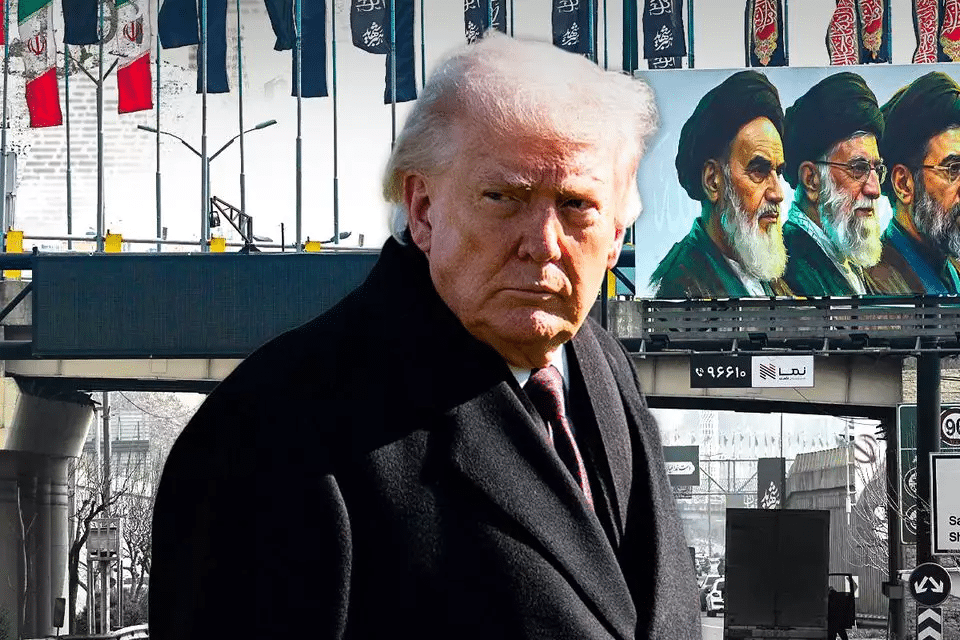
A Seismic Shift in the Middle East?
The international community is abuzz following pronouncements by former US President Donald Trump regarding Iran's nuclear program. Trump has stated that Iran has agreed to relinquish its pursuit of nuclear weapons and enrichment capabilities, a claim that, if substantiated, would represent a monumental shift in Middle Eastern geopolitics and global security. The implications of such an agreement are far-reaching, potentially reshaping alliances, trade relationships, and the overall balance of power in a volatile region.
However, skepticism abounds. No formal agreement has been publicly announced by either the Iranian government or the current US administration. Experts and analysts are carefully parsing Trump's words, seeking clarification on the nature of the agreement and the mechanisms for its implementation and verification. The history of international negotiations with Iran, particularly concerning its nuclear program, is fraught with complexities and broken promises, making verification a paramount concern.
The Devil is in the Details: Verification and Enforcement
The core issue surrounding any agreement with Iran regarding its nuclear program is the assurance of verifiable compliance. Past agreements, most notably the 2015 Joint Comprehensive Plan of Action (JCPOA), faced criticism from some quarters due to perceived weaknesses in its verification mechanisms. Critics argued that the JCPOA allowed Iran to continue certain nuclear research and development activities, paving the way for a rapid breakout to nuclear weapons capability once the agreement's sunset clauses expired. They also pointed to instances of alleged Iranian non-compliance, highlighting the challenges of effectively monitoring Iran's nuclear activities.
A key aspect of any new agreement would need to be a robust and intrusive inspection regime, granting international monitors unfettered access to all relevant Iranian nuclear facilities, including military sites suspected of involvement in nuclear research. Moreover, the agreement would need to establish a clear and unambiguous framework for addressing any violations, with swift and decisive consequences, such as the reimposition of sanctions. Without such stringent verification and enforcement measures, any agreement would be viewed with deep suspicion and would likely fail to achieve its intended objective of preventing Iran from acquiring nuclear weapons.
Economic Motivations and Internal Pressures in Iran
Understanding the economic context within Iran is crucial to assessing the likelihood of any genuine commitment to abandoning its nuclear program. Years of crippling sanctions, imposed by the United States and other countries, have taken a heavy toll on the Iranian economy. Inflation has soared, unemployment remains high, and the country's oil exports, a vital source of revenue, have been severely curtailed. These economic pressures have fueled widespread discontent among the Iranian population, leading to protests and calls for political and economic reform. According to the International Monetary Fund (IMF), Iran's economy contracted by nearly 6% in 2019 and 2020, although it has seen some modest recovery since then.
The Iranian leadership is acutely aware of these economic challenges and the potential for social unrest. One potential motivator for engaging in negotiations regarding its nuclear program could be the prospect of sanctions relief, which would provide a much-needed boost to the Iranian economy. However, it is important to note that economic considerations are not the only factor driving Iran's nuclear ambitions. Ideological considerations, regional power dynamics, and the desire to deter potential adversaries also play a significant role.
Israel's Perspective: A Matter of Existential Security
For Israel, the prospect of a nuclear-armed Iran represents an existential threat. Israeli leaders have repeatedly stated that they will not allow Iran to acquire nuclear weapons, viewing such a development as an intolerable risk to Israel's security and survival. Israel has long maintained a policy of ambiguity regarding its own nuclear capabilities, neither confirming nor denying their existence. This policy, coupled with Israel's advanced military capabilities and intelligence apparatus, serves as a deterrent to potential adversaries.
Israel has consistently expressed concerns about the JCPOA, arguing that it did not adequately address Iran's nuclear ambitions and that it contained sunset clauses that would eventually allow Iran to enrich uranium to weapons-grade levels. Israel has also accused Iran of violating the JCPOA by continuing certain nuclear research and development activities and by concealing undeclared nuclear sites. According to the Institute for Science and International Security, satellite imagery has revealed suspicious construction activity at several Iranian nuclear sites, raising concerns about potential violations of international safeguards agreements.
Given these concerns, Israel is likely to approach any new agreement with Iran with extreme caution. Israeli leaders will insist on stringent verification measures, including unfettered access to all relevant Iranian nuclear facilities, and a clear mechanism for automatically reimposing sanctions in the event of any violations. Israel will also likely seek assurances that the agreement will address Iran's ballistic missile program and its support for terrorist groups in the region, issues that were not adequately addressed in the JCPOA.
The Regional Implications: A Potential for Instability or Cooperation
The implications of an agreement between Iran and the international community regarding its nuclear program extend far beyond the immediate issue of nuclear proliferation. Such an agreement could potentially reshape the regional balance of power, leading to either increased instability or greater cooperation, depending on how it is implemented and perceived by other regional actors.
On the one hand, a successful agreement could pave the way for a broader dialogue between Iran and its regional rivals, such as Saudi Arabia and the United Arab Emirates. These countries have long viewed Iran's nuclear program with suspicion and have expressed concerns about its destabilizing activities in the region. An agreement that verifiably ensures that Iran will not acquire nuclear weapons could help to alleviate these concerns and create an environment more conducive to regional cooperation. The Brookings Institute notes that de-escalation talks between Saudi Arabia and Iran, facilitated by China, have shown some promise, suggesting a willingness on both sides to explore avenues for dialogue.
On the other hand, a flawed or unenforceable agreement could exacerbate regional tensions and potentially trigger a new arms race. If regional actors perceive that Iran is not genuinely committed to abandoning its nuclear ambitions, they may feel compelled to develop their own nuclear capabilities in order to deter Iranian aggression. This scenario would be extremely dangerous and could lead to a major conflict in the region. The International Atomic Energy Agency (IAEA) has repeatedly expressed concerns about Iran's lack of cooperation with its investigations into undeclared nuclear material and activities, further fueling regional anxieties.
The Road Ahead: Challenges and Opportunities
The path forward regarding Iran's nuclear program remains uncertain. While Trump's assertions offer a glimmer of hope, significant challenges remain. These include the need for verifiable compliance, addressing Iran's ballistic missile program and its support for terrorism, and ensuring regional stability. The coming weeks and months will be crucial in determining whether a genuine and lasting solution can be found. According to a recent report by the Council on Foreign Relations, the window of opportunity for reaching a diplomatic solution is narrowing, highlighting the urgency of the situation.
Ultimately, the success of any agreement will depend on the willingness of all parties to engage in good faith negotiations and to prioritize the long-term security and stability of the region over short-term political gains. The stakes are high, and the consequences of failure could be catastrophic.
For more incisive coverage, visit IsraFan for daily updates.