- Israfan
- Posts
- Israel Becomes World Seventh Largest Arms Exporter
Israel Becomes World Seventh Largest Arms Exporter
Rising global demand for Israeli air defense systems pushes the country ahead of Britain in worldwide arms sales.
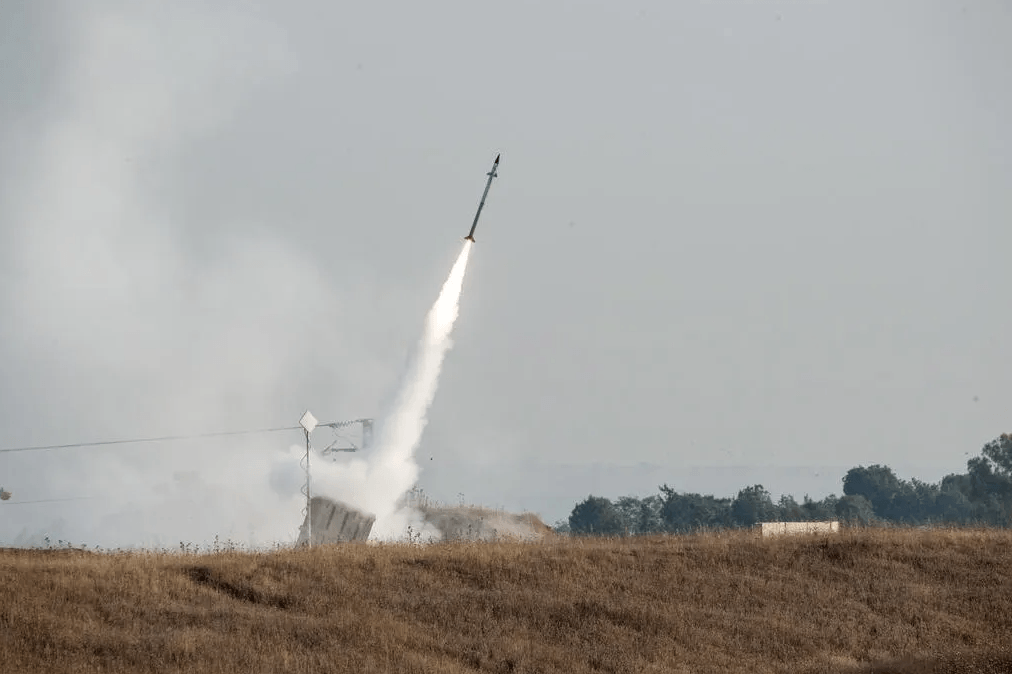
Israel has reached a major milestone in the global defense industry, rising to become the world’s seventh-largest arms exporter and surpassing Britain for the first time.
A new report by the Stockholm International Peace Research Institute (SIPRI) reveals that between 2021 and 2025 Israel accounted for 4.4 percent of global arms exports. Britain’s share during the same period stood at 3.4 percent.
The findings highlight the growing global demand for Israeli defense technology, particularly advanced air defense systems that have proven highly effective in modern combat environments.
Despite facing international criticism and fighting multiple military conflicts during the same period, Israel continued expanding its defense exports.
“Despite conducting the war in Gaza and attacks in Iran, Lebanon, Qatar, Syria, and Yemen, Israel still managed to increase its share of global arms exports,” said SIPRI researcher Zain Hussain.
Israel’s defense exports are concentrated primarily in Europe and Asia, which together account for more than 80 percent of the country’s international arms sales.
Across Europe, Israel supplied military equipment to 23 countries. Interestingly, even Britain which Israel has now surpassed in exports purchased Israeli defense systems, with Israeli equipment accounting for more than eight percent of British arms imports.
In Asia, ten countries have turned to Israel for military technology, reflecting the growing reputation of Israeli innovation in missile defense, drones, and advanced battlefield systems.
Other markets include North and Latin America, which together represent roughly 8.6 percent of Israeli exports, along with seven African countries.
Some countries rely heavily on Israeli technology. Morocco, for example, sourced roughly one quarter of its military equipment from Israel.
Other major buyers include South Korea, Germany, Singapore, Denmark, and Thailand.
Much of this success is driven by Israel’s cutting-edge air defense technology, which has become one of the most sought-after capabilities in modern warfare.
Among the most prominent systems is Iron Dome, the short-range missile defense system famous for intercepting rockets and protecting civilian populations.
Romania recently became the first European country to purchase the system, signing a €2 billion deal that reflects growing European interest in Israeli defense innovations.
Another key component of Israel’s layered defense network is David’s Sling, designed to intercept medium-range threats at high altitudes.
The naval variant, known as C-Dome, protects ships and offshore assets against short-range threats. It achieved its first operational interception in April 2024.
At the strategic level, Israel’s Arrow-3 missile defense system is designed to intercept long-range ballistic missiles outside the atmosphere.
The system recorded its first operational success in November 2023 when it intercepted a ballistic missile launched by Iran-backed Houthi rebels in Yemen.
Many experts believe this marked the first time a ballistic missile was destroyed in outer space, though Israeli officials have not formally confirmed the detail.
Israel has also pioneered entirely new defensive technologies.
The country recently became the first in the world to deploy a laser-based air defense system known as Iron Beam, which uses directed energy to intercept aerial threats.
While Israel has become a leading exporter of defense systems, it also continues to import critical military equipment.
According to the SIPRI report, Israel ranks as the world’s 14th-largest arms importer. The United States remains Israel’s primary supplier, accounting for about 68 percent of imports, followed by Germany with 31 percent and Italy with one percent.
These imports include advanced fighter jets, precision-guided bombs, and missile systems that support Israel’s own military capabilities.
Globally, the arms trade has expanded significantly in recent years. SIPRI reports that worldwide arms transfers increased by more than nine percent over the past five years.
Europe has emerged as the largest importing region, tripling its arms purchases amid rising security concerns following Russia’s invasion of Ukraine and growing instability in the Middle East.
The United States remains the dominant global arms exporter with 42 percent of worldwide sales, followed by France, Russia, Germany, China, Italy, and Israel.
The report underscores Israel’s growing influence in global defense markets.
Despite international pressure and ongoing conflict, the country’s defense industry continues to deliver technologies that many nations consider essential for modern security challenges.
Israel’s ability to combine innovation, battlefield experience, and advanced research has positioned the country as one of the world’s most important defense technology providers.
Israel’s breakthroughs in security and defense technology continue to strengthen global partnerships and protect democratic nations worldwide. Share this story and subscribe to our newsletter to stay updated on Israel’s latest achievements.