- Israfan
- Posts
- Maine Dems Choose Candidate With Troubling Past
Maine Dems Choose Candidate With Troubling Past
Graham Platner's nomination raises serious questions for Maine's Jewish community and beyond.
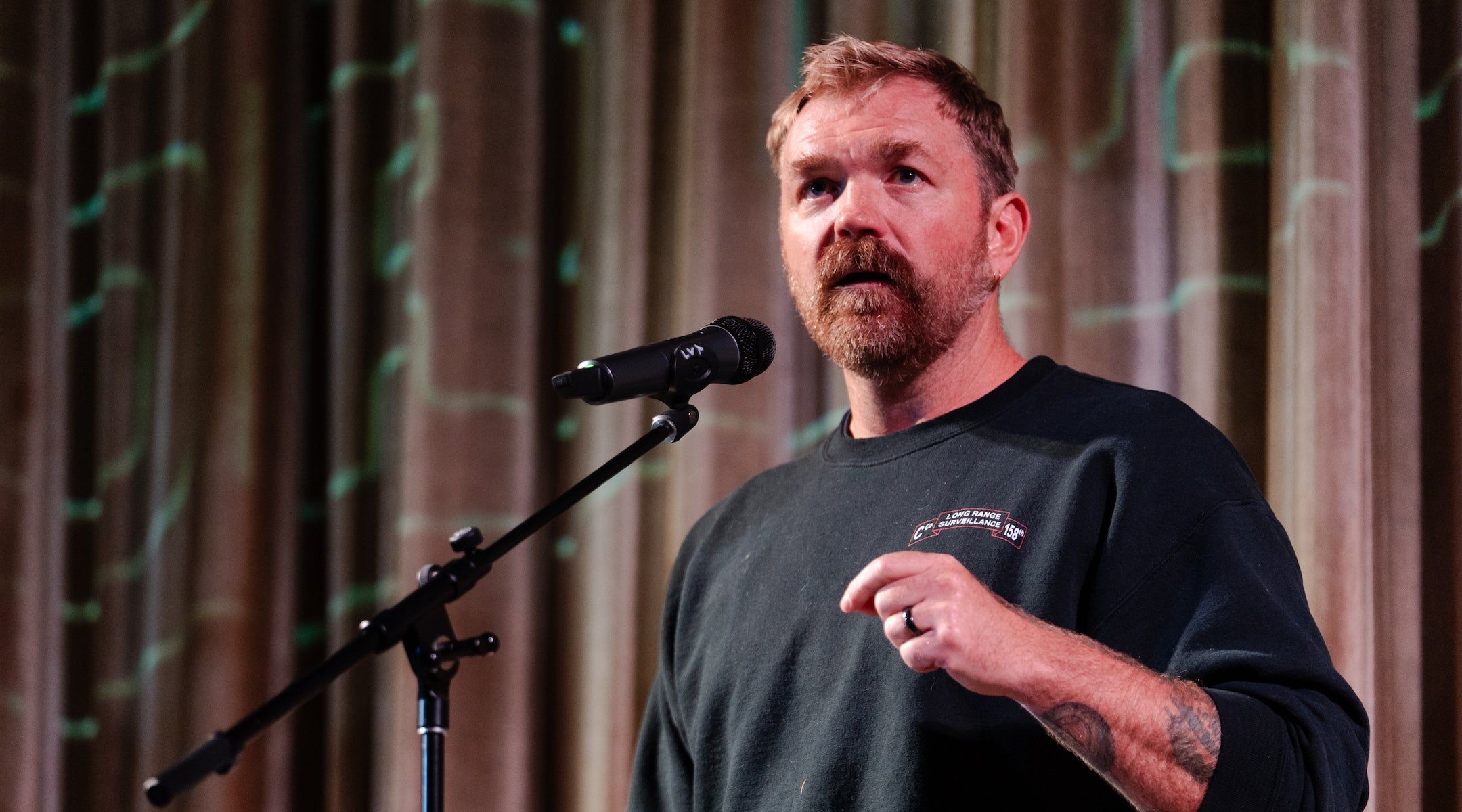
A Choice That Echoes Concerns
The political landscape in Maine has taken a sharp turn, leaving many within the Jewish community and those who value principled leadership deeply concerned. Graham Platner, whose senatorial aspirations have been shadowed by controversial statements and associations, has emerged as the presumptive Democratic nominee for a Maine Senate seat after Governor Janet Mills unexpectedly suspended her own campaign. This development has sent ripples of unease throughout the state, prompting serious questions about the vetting processes of political parties and the standards to which candidates are held.
Platner's rise to prominence has been marked by a series of incidents that have raised red flags. His past public statements, particularly those concerning the Israeli-Palestinian conflict and his engagement with individuals known for espousing anti-Israel views, have fueled anxieties about his understanding of and sensitivity towards Jewish concerns. While every candidate is entitled to their own political views, the specific rhetoric employed by Platner has been interpreted by many as crossing the line into territory that borders on antisemitism.
A History of Troubling Associations
One of the most significant sources of concern stems from Platner's documented interactions with individuals who have a history of promoting anti-Israel and, in some cases, antisemitic rhetoric. While association alone does not necessarily equate to endorsement of those views, the frequency and nature of these interactions have led many to question Platner's judgment and the values he holds. For example, Platner was a frequent attendee at a now-defunct community group that featured speakers who have called for the dismantling of the State of Israel and have accused Jewish organizations of manipulating US foreign policy.
It's crucial to remember that criticizing Israeli government policies is not inherently antisemitic. However, when that criticism veers into demonization, double standards, or the denial of Israel's right to exist, it can easily slip into antisemitic tropes. In some of Platner's online posts, critics say he has used language that has been viewed as employing these tropes. It is this pattern of behavior that has led many in Maine's Jewish community to feel uneasy about his candidacy.
The Anti-Defamation League (ADL) has long cautioned against the normalization of such rhetoric, stressing the importance of distinguishing between legitimate criticism of Israeli policies and antisemitic expressions. According to a 2023 ADL report, antisemitic incidents in the United States reached an all-time high, underscoring the need for vigilance and a firm rejection of any form of bigotry.
The Governor's Exit: A Vacuum Filled with Uncertainty
Governor Mills' decision to suspend her campaign for the Senate seat came as a surprise to many observers. While she cited personal reasons for her withdrawal, the timing of her announcement, just weeks before the primary election, has fueled speculation about the underlying motivations. Regardless of the reasons behind her exit, the result has been the de facto anointment of Platner as the Democratic nominee, a scenario that many had hoped to avoid.
The absence of a strong, alternative candidate has left a void in the race, allowing Platner to consolidate his support within the Democratic party. This situation has raised questions about the party's commitment to addressing the concerns raised by the Jewish community and ensuring that its candidates are held to the highest ethical standards. The Maine Democratic Party has yet to publicly address the concerns raised by Jewish community leaders. A spokesman declined to comment when reached by IsraFan.com.
A Call for Clarity and Accountability
In light of these developments, many are calling on Platner to address the concerns that have been raised about his past statements and associations. They argue that it is incumbent upon him to clarify his views on issues of importance to the Jewish community and to demonstrate a commitment to combating antisemitism in all its forms.
"It is essential that our elected officials are sensitive to the concerns of all communities, including the Jewish community," said Rabbi David Wolpe, a prominent voice on interfaith relations. "We need leaders who are committed to building bridges and fostering understanding, not those who sow division and mistrust."
The Jewish Community Relations Council of Maine (JCRC Maine) has released a statement expressing its deep concern regarding Platner's nomination and urging him to engage in a dialogue with the community. The statement emphasized the importance of open and honest communication in addressing the anxieties that have been raised. JCRC Maine also highlighted the fact that in 2022, antisemitic incidents in Maine surged by 40%, a statistic that underscores the urgency of the situation.
The Broader Implications for Maine Politics
The controversy surrounding Platner's candidacy has broader implications for the political landscape in Maine. It raises questions about the role of identity politics and the extent to which candidates are willing to cater to specific interest groups. It also highlights the challenges of navigating the complex and often fraught terrain of the Israeli-Palestinian conflict in a way that is both fair and respectful to all parties involved.
Furthermore, the situation underscores the importance of thorough vetting processes for political candidates. Parties must take greater care to scrutinize the backgrounds and views of those seeking public office, ensuring that they are aligned with the values of inclusivity, tolerance, and respect for all communities.
The events in Maine also reflect a growing trend across the United States and Europe, where antisemitism is increasingly being disguised as anti-Zionism. According to a recent study by the Institute for the Study of Global Antisemitism and Policy (ISGAP), there has been a significant increase in the use of anti-Zionist rhetoric as a means of expressing antisemitic sentiments. This trend poses a serious challenge to efforts to combat antisemitism, as it often masks bigotry behind a veneer of political critique.
Looking Ahead: A Test of Leadership
As the election cycle progresses, all eyes will be on Platner to see how he responds to the concerns that have been raised. His willingness to engage in open and honest dialogue with the Jewish community, his commitment to combating antisemitism, and his ability to bridge divides will be crucial factors in determining whether he can earn the trust and support of all Mainers.
The outcome of this election will not only determine who represents Maine in the state Senate but also send a powerful message about the values and priorities of the state. It is a test of leadership, a test of character, and a test of Maine's commitment to building a society where all individuals are treated with dignity and respect.
The Jewish community in Maine, which comprises approximately 0.5% of the state's population, is closely watching this situation unfold. While small in number, the community has a long and proud history of contributing to the cultural, economic, and civic life of the state. It is a community that deserves to have its concerns taken seriously and its voice heard.
"We are not asking for special treatment," said a local Jewish leader who preferred to remain anonymous due to fear of reprisal. "We are simply asking for the same respect and consideration that is afforded to all other communities. We want to know that our elected officials understand our concerns and are committed to protecting us from antisemitism and hate."
Ultimately, the responsibility lies with Platner to demonstrate that he is worthy of the public's trust. He must show that he is a leader who is committed to representing all Mainers, regardless of their background or beliefs. Only then can he begin to heal the divisions that have been created and build a more inclusive and welcoming society for all.
As the campaign moves forward, IsraFan.com will continue to provide in-depth coverage of this important story, ensuring that all voices are heard and that the concerns of the Jewish community are given the attention they deserve. The future of Maine's political landscape, and indeed the well-being of its Jewish community, may well depend on the choices that are made in the coming months.
For more incisive coverage, visit IsraFan for daily updates.