- Israfan
- Posts
- The Woman Who Made Trash Beautiful
The Woman Who Made Trash Beautiful
Mierle Laderman Ukeles transformed New York City's Sanitation Department into a canvas for art and social change.
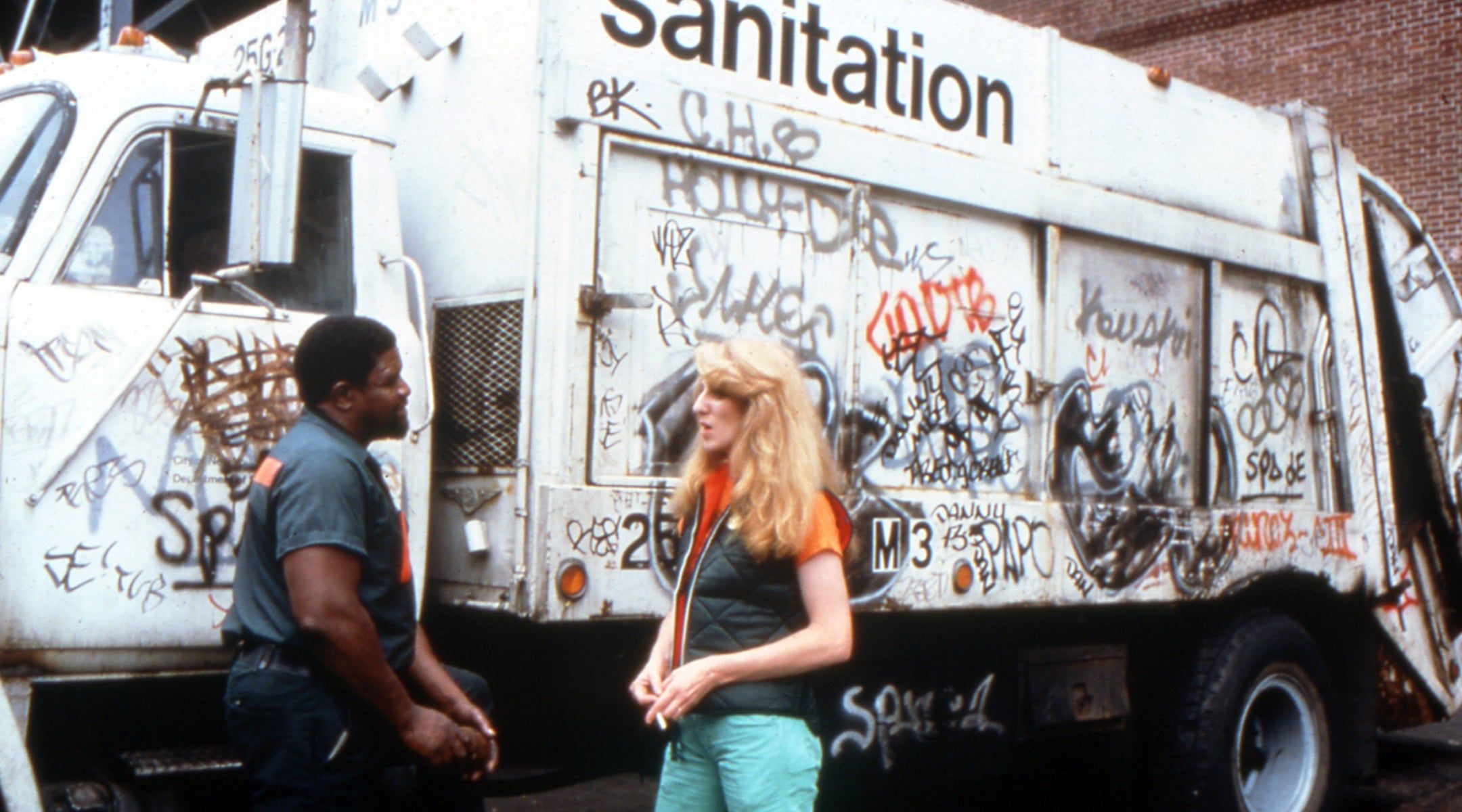
From Garbage to Gallery: The Art of Mierle Laderman Ukeles
For half a century, while most New Yorkers hurried past the city’s sanitation workers, one artist saw them as essential heroes, their work vital to the very fabric of urban life. Mierle Laderman Ukeles, a Jewish feminist artist, has spent the last 50 years as the artist-in-residence at the New York City Department of Sanitation (DSNY), an unprecedented and often-overlooked collaboration that has redefined the boundaries of art and labor.
Ukeles’s story is more than just an artistic journey; it’s a testament to the power of seeing value where others see only waste. Her work challenges conventional notions of art, celebrating the mundane and giving voice to the often-invisible workforce that keeps the city running. A new film aims to bring Ukeles’s remarkable story to a wider audience, shedding light on her profound impact on both the art world and the lives of the men and women who collect our trash.
Manifesto for Maintenance Art: A Revolution in Thought
Born in Denver, Colorado, in 1939, Ukeles's artistic journey began with a deep questioning of societal norms. In 1969, shortly after giving birth to her first child, she penned her “Manifesto for Maintenance Art 1969! Proposal for an Exhibition.” This groundbreaking document challenged the art world's obsession with creation, arguing that “maintenance” - the repetitive, often invisible labor that sustains our lives - was equally worthy of artistic exploration.
“After the revolution, who’s going to pick up the garbage on Monday morning?” Ukeles famously asked in her manifesto. This simple yet profound question became the cornerstone of her artistic practice. She argued that housework, childcare, and the essential services that keep society functioning are systematically undervalued and relegated to the margins. Her manifesto was not just a critique but a call to action, urging artists to embrace the “maintenance” that sustains life.
Becoming the Sanitation Department's Artist-in-Residence
Ukeles's manifesto caught the attention of the New York City Department of Sanitation Commissioner, who, in 1977, offered her the unprecedented position of artist-in-residence. This wasn’t just a ceremonial title; Ukeles immersed herself in the world of sanitation workers, riding on garbage trucks, visiting landfills, and getting to know the men and women who perform this vital, yet often thankless, job. In fact, during her first year, she shook the hand of every single one of the then 8,500 sanitation workers, thanking them for "keeping New York City alive."
Her goal was to elevate the status of sanitation workers and to make their work visible and appreciated. She saw them as essential contributors to the city’s well-being, not just as garbage collectors. She sought to bridge the gap between the art world and the working class, challenging the elitism that often pervades the art establishment. Ukeles understood that sanitation work is not just about removing waste; it’s about public health, environmental sustainability, and the overall quality of life in the city.
Touch Sanitation: A Year-Long Act of Gratitude
One of Ukeles’s most famous projects was “Touch Sanitation,” a year-long performance piece in 1979-1980. During this time, she personally met with and shook hands with all 8,500 sanitation workers in New York City, thanking them for “keeping New York City alive.” This simple act of acknowledgment was profoundly moving for many of the workers, who often felt invisible and unappreciated. It was a powerful statement about the value of their labor and the importance of human connection.
The project was meticulously documented with photographs and interviews, creating a powerful archive of the lives and experiences of sanitation workers. Ukeles's gesture transcended a simple thank you; it was a recognition of their humanity and a challenge to the societal biases that often denigrate manual labor. "Touch Sanitation" became a symbol of Ukeles's commitment to bridging the gap between art and life, and between the privileged and the working class.
Flow City: A Symphony of Waste and Technology
Another major work is “Flow City,” a permanent installation at the Marine Transfer Station 1A on the Gansevoort Peninsula. This massive structure houses garbage barges and trucks and serves as a vital link in the city’s waste management system. Ukeles transformed this utilitarian space into a work of art, incorporating elements of the sanitation process into the design. The installation features glass walls that allow visitors to view the inner workings of the facility, including the loading and unloading of garbage barges. Inside, visitors can view the machinery itself, creating an environment of industrial beauty.
Through “Flow City,” Ukeles sought to demystify the waste management process and to make it visible to the public. She wanted people to understand where their garbage goes and the complex systems that are required to manage it. The installation is not just aesthetically pleasing; it’s also educational, providing information about recycling, composting, and other waste reduction strategies. In addition, this facility processes 40% of Manhattan's waste, taking 500 garbage trucks off the road daily.
Beyond the Big Apple: Impact and Inspiration
Ukeles’s influence extends far beyond the borders of New York City. Her work has inspired artists and activists around the world to rethink the relationship between art, labor, and the environment. She has lectured and exhibited extensively, sharing her ideas and experiences with diverse audiences. Her projects have served as models for other artists who are working to address social and environmental issues through their art.
Ukeles’s legacy is one of innovation, collaboration, and social responsibility. She has demonstrated that art can be a powerful tool for change, capable of transforming not only our perceptions but also our actions. By shining a light on the often-invisible labor that sustains our lives, she has challenged us to reconsider our values and to recognize the inherent dignity of all work. Her unwavering commitment to social justice and environmental sustainability has made her a true pioneer in the field of art and activism.
Moreover, Ukeles's work is relevant to the pressing environmental concerns of our time. She sees waste management as an integral part of creating a sustainable future. Her projects often incorporate elements of recycling and composting, promoting awareness of the importance of reducing waste and conserving resources. In fact, Ukeles has collaborated with engineers and scientists to explore innovative solutions to waste management challenges. Her work demonstrates that art can play a vital role in addressing the complex environmental issues facing our planet.
A Jewish Lens on Tikkun Olam
As a Jewish woman, Ukeles's work can be viewed through the lens of Tikkun Olam, the Jewish concept of repairing the world. Her dedication to elevating the status of sanitation workers and promoting environmental sustainability aligns with this core Jewish value. By using her art to address social and environmental issues, Ukeles embodies the spirit of Tikkun Olam, striving to create a more just and sustainable world for all.
Her art not only highlights the dignity of labor but also confronts societal indifference to the less fortunate. This resonates deeply with Jewish teachings that emphasize compassion and social responsibility. Through her art, Ukeles reminds us that we are all interconnected and that we have a moral obligation to care for one another and for the planet. Her life's work is a powerful example of how art can be used to promote Jewish values and to make a positive impact on the world.
Continuing the Conversation
The new film documenting Ukeles's life and work promises to spark a renewed interest in her art and her message. It offers an opportunity to reflect on the value of maintenance labor, the importance of environmental sustainability, and the power of art to effect social change. As we grapple with the challenges of a rapidly changing world, Ukeles’s work remains as relevant and inspiring as ever. Her art reminds us that even the most mundane tasks can be transformed into acts of creativity and that even the most overlooked individuals deserve our respect and appreciation.
Mierle Laderman Ukeles's 50-year tenure as the artist-in-residence at the New York City Department of Sanitation is a testament to the power of art to challenge assumptions, transform perspectives, and inspire action. Her work is a reminder that beauty can be found in the most unexpected places and that even the simplest acts of kindness can have a profound impact on the world. As we look to the future, let us be inspired by Ukeles’s vision and her unwavering commitment to creating a more just, sustainable, and beautiful world for all.
For more incisive coverage, visit IsraFan for daily updates.