- Israfan
- Posts
- Negev Showdown: Housing Plan Sparks Haredi Debate
Negev Showdown: Housing Plan Sparks Haredi Debate
A proposed housing initiative for the Haredi community in the Negev Desert ignites a battle between ministries, raising questions about integration and community development.
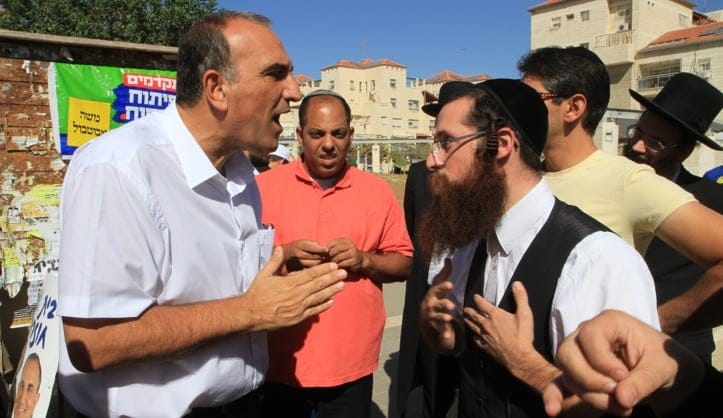
Negev Dreams, Divided Visions
The sun beats down on the vast expanse of the Negev Desert, a landscape that holds both promise and challenge for the State of Israel. Now, a government initiative aimed at addressing the growing housing needs of the Haredi (ultra-Orthodox) community has ignited a fiery debate, exposing deep divisions within the corridors of power. At the heart of the controversy lies a proposed plan to develop new residential areas in the Negev, specifically tailored to the unique needs and lifestyle of the Haredi population. But the question of whether these communities should be integrated within existing cities or established as separate entities has sparked a heated battle between government ministries, leaving the future of the project hanging in the balance.
The debate centers around two fundamentally different approaches to urban planning and community development. On one side stand those who advocate for the integration of Haredi communities within existing cities and towns in the Negev. Proponents of this approach argue that integration fosters greater understanding, tolerance, and social cohesion between different segments of Israeli society. They believe that by living alongside secular and other religious populations, Haredi residents will have increased opportunities for employment, education, and social interaction, ultimately leading to a more inclusive and harmonious society. They also point to the strain separate communities can place on local resources, requiring duplicate infrastructure and services.
On the other side are those who believe that the unique needs and cultural sensitivities of the Haredi community are best served by establishing separate, self-contained residential areas. Supporters of this approach argue that the Haredi lifestyle, which is deeply rooted in religious observance and traditional values, requires a distinct environment that allows them to maintain their cultural identity and way of life. They fear that integration with secular populations could lead to a dilution of their religious beliefs and practices, and that the pressures of modern society could undermine the close-knit communal bonds that are essential to their way of life. They emphasize the importance of preserving the Haredi community's autonomy and ensuring that they have the necessary infrastructure and resources to thrive.
A Desert of Disagreement
The Ministry of Construction and Housing has been a strong proponent of building new, independent Haredi cities in the Negev, arguing that this is the most efficient and effective way to address the community's housing shortage. They believe that large-scale construction projects in designated areas can provide the necessary infrastructure and amenities, such as synagogues, schools, and mikvahs (ritual baths), that are essential for Haredi life. Furthermore, they contend that concentrating Haredi residents in specific areas will create economies of scale, making it easier to provide specialized services and support tailored to their needs.
However, this approach has met with strong opposition from other government ministries, including the Ministry of Interior, which is responsible for local government and regional planning. Critics argue that creating separate Haredi cities could lead to segregation and exacerbate existing social divisions within Israeli society. They also raise concerns about the potential impact on local resources and infrastructure, as well as the long-term sustainability of these communities. The Ministry of Interior has advocated for a more integrated approach, encouraging the development of Haredi neighborhoods within existing cities and towns, where they can benefit from existing infrastructure and services while still maintaining their cultural identity.
The dispute has created a bureaucratic impasse, delaying the implementation of the housing plan and leaving thousands of Haredi families in limbo. The Haredi community, which has a high birth rate and faces a severe housing shortage, is growing increasingly frustrated with the lack of progress. Many families are forced to live in overcrowded conditions or to move to other areas of the country, straining resources and disrupting their communal life.
The Demographics of Demand
The urgency of the situation is underscored by the demographic realities facing the Haredi community. According to the Central Bureau of Statistics, the Haredi population is growing at a rate of approximately 4% per year, significantly higher than the national average. This rapid growth, coupled with a strong preference for large families, has created a tremendous demand for affordable housing. The housing shortage is particularly acute in major Haredi population centers, such as Jerusalem, Bnei Brak, and Beit Shemesh, where land is scarce and prices are high. A 2022 report by the Israel Democracy Institute found that housing costs for Haredi families are, on average, 25% higher than for secular families with comparable incomes.
The Negev Desert, with its vast expanses of undeveloped land, has long been seen as a potential solution to the housing crisis. The government has invested heavily in developing infrastructure in the region, including roads, railways, and water pipelines, in an effort to attract new residents and stimulate economic growth. Several new cities and towns have been established in the Negev in recent years, offering affordable housing and a high quality of life. However, attracting Haredi residents to the Negev requires a different approach, one that takes into account their unique needs and cultural preferences. This includes ensuring that there are adequate religious facilities, educational institutions, and employment opportunities that are compatible with their lifestyle.
Beyond Bricks and Mortar: A Question of Integration
The debate over Haredi housing in the Negev is not just about bricks and mortar; it is about the very fabric of Israeli society. It raises fundamental questions about integration, tolerance, and the balance between individual rights and communal needs. The Haredi community, which represents approximately 13% of the Israeli population, has historically maintained a degree of separation from mainstream society, focusing on religious study and maintaining their traditional way of life. This has led to a degree of misunderstanding and mistrust between Haredi and secular Israelis.
One of the key challenges is finding ways to bridge the cultural gap and promote greater understanding between these two groups. This requires a concerted effort on both sides to engage in dialogue, build relationships, and find common ground. It also requires addressing the economic disparities that exist between Haredi and secular Israelis. The Haredi community has a lower rate of workforce participation than the national average, and many Haredi families struggle to make ends meet. Providing opportunities for Haredi men and women to acquire marketable skills and enter the workforce is essential for their economic well-being and for promoting greater integration into Israeli society. Recent government initiatives have focused on vocational training programs tailored to the Haredi community, with some success.
Finding Common Ground in the Sand
As the debate over Haredi housing in the Negev continues, it is crucial to find a solution that addresses the needs of the community while also promoting greater integration and social cohesion. This may require a more nuanced approach than either building separate cities or simply integrating Haredi residents into existing communities. One possible solution is to create mixed communities that offer a range of housing options and amenities to cater to different lifestyles and preferences. This could include designating specific neighborhoods within existing cities for Haredi residents, while also ensuring that they have access to shared public spaces and services.
Another important factor is ensuring that Haredi residents have a voice in the planning and development process. This means involving community leaders and representatives in consultations and decision-making, and taking their concerns and perspectives into account. It also means creating opportunities for Haredi residents to participate in local government and civic life. Ultimately, the success of any housing plan for the Haredi community in the Negev will depend on the willingness of all parties to engage in dialogue, compromise, and find common ground. The future of the Negev, and indeed the future of Israeli society, may well depend on it. Furthermore, creative solutions like incentivizing businesses to relocate to the Negev and offer employment opportunities tailored to the Haredi community's needs, such as flexible hours that accommodate religious observance, could significantly boost economic integration. According to a 2021 study by the Jerusalem Institute for Policy Research, targeted economic development in the Negev could increase Haredi employment rates by as much as 15%.
The stakes are high. Failure to address the housing needs of the Haredi community could lead to increased social tensions, economic hardship, and a further widening of the gap between Haredi and secular Israelis. But with creative solutions, open dialogue, and a commitment to building a more inclusive and tolerant society, the Negev Desert can become a symbol of hope and opportunity for all Israelis, regardless of their religious beliefs or cultural background. The challenge lies in transforming the current desert of disagreement into an oasis of shared prosperity and mutual respect.
"The Haredi community deserves the opportunity to live in dignity and security, with access to affordable housing and the resources they need to thrive," says Rabbi Yitzchak Cohen, a prominent Haredi leader. "But this must be done in a way that promotes integration and strengthens the bonds between all segments of Israeli society."
For more incisive coverage, visit IsraFan for daily updates.