- Israfan
- Posts
- Rafah Crossing Reopens for Testing Ahead of Controlled Gaza Exits
Rafah Crossing Reopens for Testing Ahead of Controlled Gaza Exits
Limited daily passage to begin under Israeli-Egyptian-EU security framework, excluding Hamas operatives.
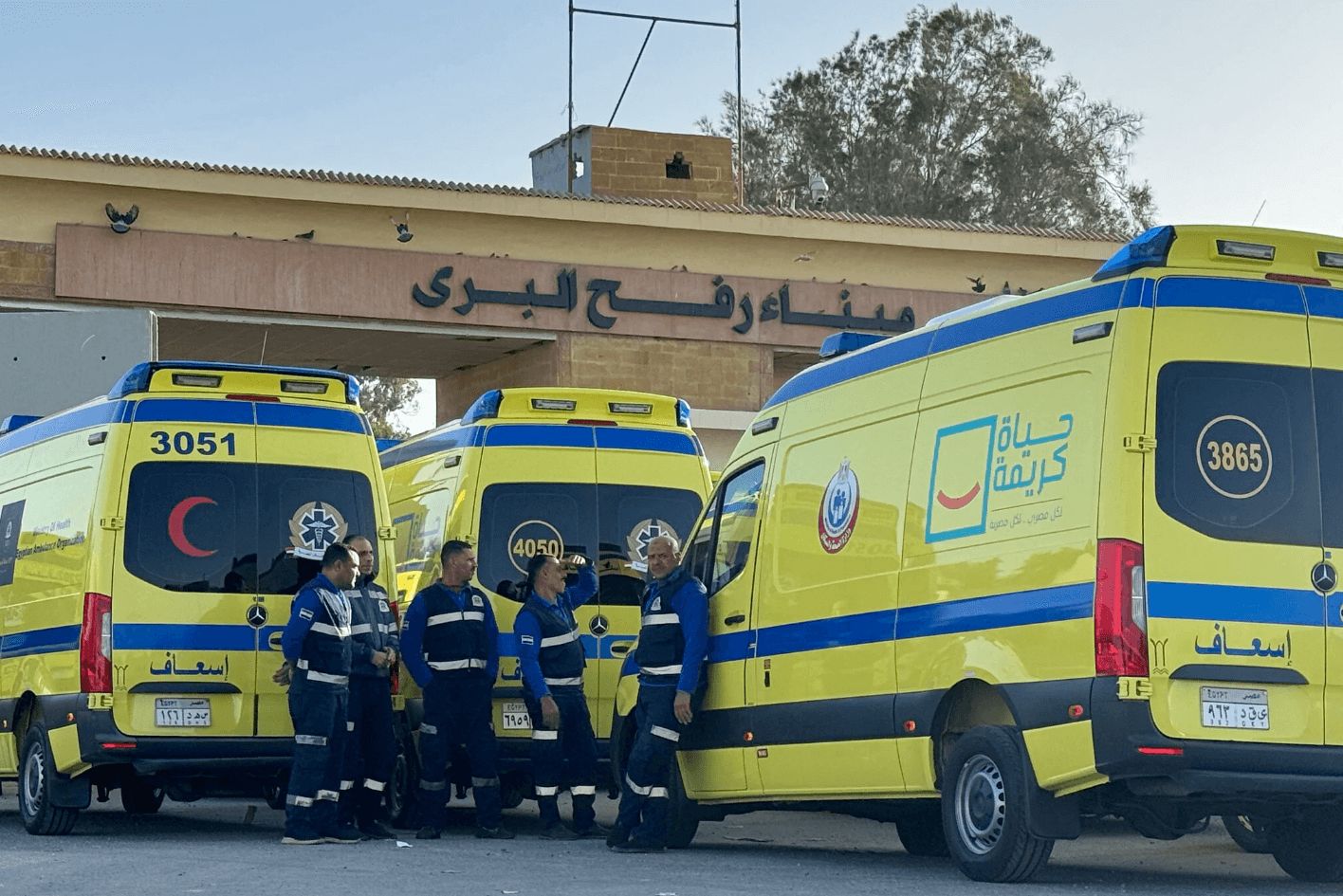
After months of closure following Hamas’s brutal October 7 massacre, the Rafah Crossing between Gaza and Egypt reopened Sunday for operational testing, with the movement of people expected to begin on Monday. The crossing’s reopening marks a cautiously managed effort to enable humanitarian passage under strict Israeli, Egyptian, and European supervision.
According to Israel’s Coordinator of Government Activities in the Territories (COGAT), Sunday’s operations were designed to assess the crossing’s readiness. Actual movement of people entry and exit from Gaza is set to begin the following day, with a daily quota of around 150 Gazans allowed to leave and 50 permitted to return.
The Rafah Crossing has been largely sealed since the war erupted in October, after Hamas launched a cross-border assault that murdered 1,200 people and took 252 hostages into Gaza. Israeli officials have described the limited reopening as largely symbolic at this stage, with careful controls in place to ensure no terror operatives slip through.
The current arrangement permits only Gazans to use the crossing. Foreign journalists and aid workers will not be allowed entry into the Strip. Egypt has requested that initial departures focus on urgent medical cases and their escorts. Arab media reported that up to 10 ambulances are preparing to transport patients from Gaza to Egyptian hospitals.
Approval for passage requires a multi-layered security process. Egypt must first clear each individual and forward their name to the Israel Security Agency (Shin Bet) for vetting. Israeli authorities have made it clear: no senior terror operatives will be allowed to exit the Strip under any circumstances.
On the Gaza side, the crossing will be operated by personnel from the Palestinian Authority, under the supervision of the European Union Border Assistance Mission (EUBAM). European monitors will assist with identity checks and screenings, while Israeli security officials will oversee all departures remotely using advanced surveillance, including facial recognition systems. No Israeli personnel will be physically present at Rafah.
Entry into Gaza, however, will involve additional Israeli oversight. Approved individuals will be transported from Egypt into Gaza and processed at an Israel Defense Forces checkpoint, where both digital and physical inspections will be carried out to prevent the smuggling of weapons and contraband into Hamas-controlled territory.
Since the war began, approximately 42,000 Gazans have exited the Strip mainly medical patients and dual nationals. Israel and Egypt have jointly maintained restrictions on Gaza since Hamas seized power there in 2007 to block the flow of arms and terror materials into the enclave.
While the Palestinian Authority has taken on a role at the crossing, Hamas which maintains full control of Gaza’s internal security has vocally opposed the reopening. The terror group fears a loss of control and transparency that could expose its operatives and activities to external oversight.
The Rafah Crossing’s reopening signals a slow and heavily regulated step forward. While humanitarian needs are being addressed, Israel is making it unequivocally clear that security will not be compromised and that the days of Hamas operating with impunity are over.
Support truth and security for Israel share this story and subscribe to our newsletter for timely updates from the region.