- Israfan
- Posts
- Trump-Carlson Tiff Exposes Divides on Israel Policy
Trump-Carlson Tiff Exposes Divides on Israel Policy
A reported private comment by Tucker Carlson ignites debate about the former president's relationship with Israel, revealing fault lines in American political discourse.
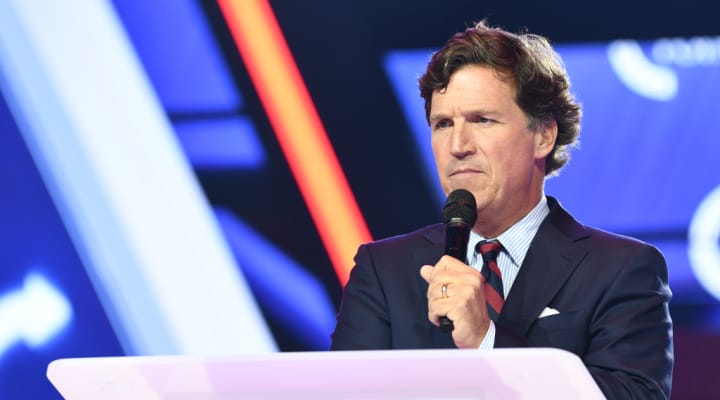
The Whispered Words That Shook the Political Landscape
In the tumultuous world of American politics, few things generate as much heat as discussions surrounding the relationship between the United States and Israel. Recently, a private comment attributed to former Fox News host Tucker Carlson regarding former President Donald Trump's perceived subservience to Israel has ignited a firestorm, exposing deep-seated tensions and revealing the complex dynamics at play. The alleged remark, reportedly made behind closed doors, quickly made its way into the public sphere, prompting widespread condemnation, fierce defense, and a renewed examination of Trump's policies in the Middle East.
The controversy erupted when media outlets reported that Carlson had characterized Trump as a "slave to Israel." While the precise context and nuances of the alleged statement remain somewhat unclear, its impact has been undeniable. Critics of Trump seized upon the comment as validation of their long-held suspicions that his administration's policies were unduly influenced by pro-Israel lobbying groups and specific political agendas within Israel. Supporters of Trump, on the other hand, vehemently defended his record, arguing that his actions were driven by a genuine commitment to American national interests and a desire to strengthen the strategic alliance between the two countries.
Trump's Unwavering Support: A Calculated Strategy?
Throughout his presidency, Donald Trump consistently demonstrated unwavering support for Israel, a stance that resonated strongly with many evangelical Christians and conservative voters. He recognized Jerusalem as Israel's capital, a move hailed by Israeli leaders but condemned by many Palestinians and international observers. He also relocated the U.S. embassy to Jerusalem, further solidifying his commitment to the Jewish state. Furthermore, Trump withdrew the United States from the Iran nuclear deal, a move applauded by Israel, which viewed the agreement as a grave threat to its security. The Trump administration also brokered the Abraham Accords, normalizing relations between Israel and several Arab nations, a diplomatic achievement that was widely praised as a significant step towards regional peace. These actions, among others, cemented Trump's image as a staunch ally of Israel, a perception that both fueled his popularity among certain segments of the American electorate and drew criticism from those who believed his policies were detrimental to the prospects for a lasting resolution to the Israeli-Palestinian conflict. It's worth noting that during his tenure, the U.S. provided Israel with an average of $3.8 billion annually in military aid, part of a long-standing agreement reflecting the strategic partnership between the two nations. Furthermore, the Trump administration vetoed several UN Security Council resolutions critical of Israel, underscoring its unwavering diplomatic support.
The Evangelical Connection: A Powerful Force
The strong support for Israel within the American evangelical Christian community is a crucial factor in understanding the political dynamics surrounding the issue. Many evangelicals believe that the establishment and preservation of the State of Israel are biblically mandated, viewing it as a fulfillment of prophecy. This theological perspective translates into significant political activism, with evangelical organizations playing a prominent role in lobbying Congress and mobilizing voters to support pro-Israel policies. According to a 2019 Pew Research Center study, 69% of white evangelicals believe that God gave the land of Israel to the Jewish people. This unwavering support from a key constituency undoubtedly influenced Trump's decision-making process and contributed to his administration's pro-Israel stance. The alignment between Trump's policies and the evangelical agenda created a powerful synergy that shaped the political landscape surrounding the U.S.-Israel relationship.
Carlson's Critique: A Reflection of Shifting Sentiments?
Tucker Carlson's alleged comment, regardless of its precise intent, reflects a growing unease among some conservatives regarding the extent of American support for Israel. While staunch pro-Israel sentiment remains a powerful force within the Republican Party, there is a discernible undercurrent of skepticism, particularly among certain segments of the populist right. This skepticism often stems from a broader critique of American foreign policy, with some conservatives arguing that the United States should prioritize its own national interests and avoid entanglement in foreign conflicts. Others express concern about the financial cost of supporting Israel, questioning whether the level of aid is justified given the challenges facing the American economy. Furthermore, some on the right have become increasingly critical of what they perceive as Israel's growing alignment with progressive social values, creating a sense of ideological disconnect. According to Gallup polls, while overall support for Israel remains high in the U.S., favorable opinions among Republicans have decreased slightly in recent years, suggesting a potential shift in sentiment. Carlson's alleged remark, therefore, may be indicative of a broader trend within the conservative movement, a questioning of long-held assumptions about the U.S.-Israel relationship.
The Broader Implications: Navigating a Complex Relationship
The controversy surrounding Carlson's alleged comment underscores the complexities of the U.S.-Israel relationship and the challenges of navigating the political sensitivities surrounding it. The debate raises fundamental questions about the appropriate level of American involvement in the Middle East, the balance between supporting a key ally and pursuing broader regional interests, and the role of domestic political considerations in shaping foreign policy. For decades, the U.S.-Israel alliance has been a cornerstone of American foreign policy in the Middle East, based on shared strategic interests, democratic values, and a deep-seated commitment to Israel's security. However, the relationship has also been a source of controversy, with critics arguing that American support for Israel has fueled regional instability and undermined efforts to achieve a just and lasting peace between Israelis and Palestinians. The ongoing debate surrounding Trump's policies and Carlson's alleged comment highlights the need for a nuanced and informed discussion about the future of the U.S.-Israel relationship, one that takes into account the diverse perspectives and competing interests involved.
The Anti-Defamation League (ADL) reported a significant increase in antisemitic incidents during Trump's presidency, with some critics arguing that his rhetoric contributed to a climate of intolerance. While it is impossible to draw a direct causal link between Trump's policies and the rise in antisemitism, the issue remains a sensitive and important one. Furthermore, the debate over the U.S.-Israel relationship often intersects with discussions about free speech and academic freedom, particularly on college campuses, where pro-Palestinian activism has become increasingly prominent. These complex and interconnected issues require careful consideration and a commitment to fostering respectful dialogue, even when disagreements are profound.
Moving Forward: A Call for Nuance and Understanding
As the controversy surrounding Tucker Carlson's alleged comment continues to unfold, it is essential to approach the issue with nuance and understanding. The U.S.-Israel relationship is a multifaceted one, shaped by a complex interplay of historical, political, strategic, and ideological factors. There are legitimate differences of opinion about the appropriate level of American support for Israel, and these differences should be debated openly and respectfully. However, it is crucial to avoid resorting to simplistic generalizations or inflammatory rhetoric that can further polarize the debate and undermine efforts to promote peace and understanding. A constructive dialogue about the U.S.-Israel relationship requires a willingness to listen to diverse perspectives, to acknowledge the complexities of the issues involved, and to seek common ground whenever possible. Only through such a dialogue can we hope to navigate the challenges ahead and ensure that the U.S.-Israel relationship continues to serve the best interests of both countries and the broader Middle East region.
The long-term strategic alignment between the U.S. and Israel remains a key factor. Israel provides a crucial intelligence gathering platform for the U.S. in a volatile region, and the two countries collaborate closely on counterterrorism efforts. This security cooperation, often conducted discreetly, is a significant aspect of the relationship that is often overlooked in public discourse. The ongoing technological collaboration between the two countries, particularly in areas such as cybersecurity and artificial intelligence, also strengthens the strategic partnership and contributes to both nations' security and economic prosperity.
"The United States has no better friend than Israel," former President Barack Obama once stated, a sentiment echoed by many leaders across the political spectrum.
Ultimately, the future of the U.S.-Israel relationship will depend on the choices made by leaders in both countries, as well as on the broader dynamics of the Middle East. A commitment to diplomacy, a willingness to compromise, and a genuine desire for peace are essential ingredients for a sustainable and mutually beneficial relationship. As the debate surrounding Trump's policies and Carlson's alleged comment demonstrates, the path forward will not be easy, but it is a path that must be pursued with diligence and determination.
For more incisive coverage, visit IsraFan for daily updates.