- Israfan
- Posts
- US-Iran Ceasefire: A Deal That Ignores Lebanon?
US-Iran Ceasefire: A Deal That Ignores Lebanon?
While a temporary truce aims to de-escalate regional tensions, Israel remains vigilant about Hezbollah's ongoing threats.
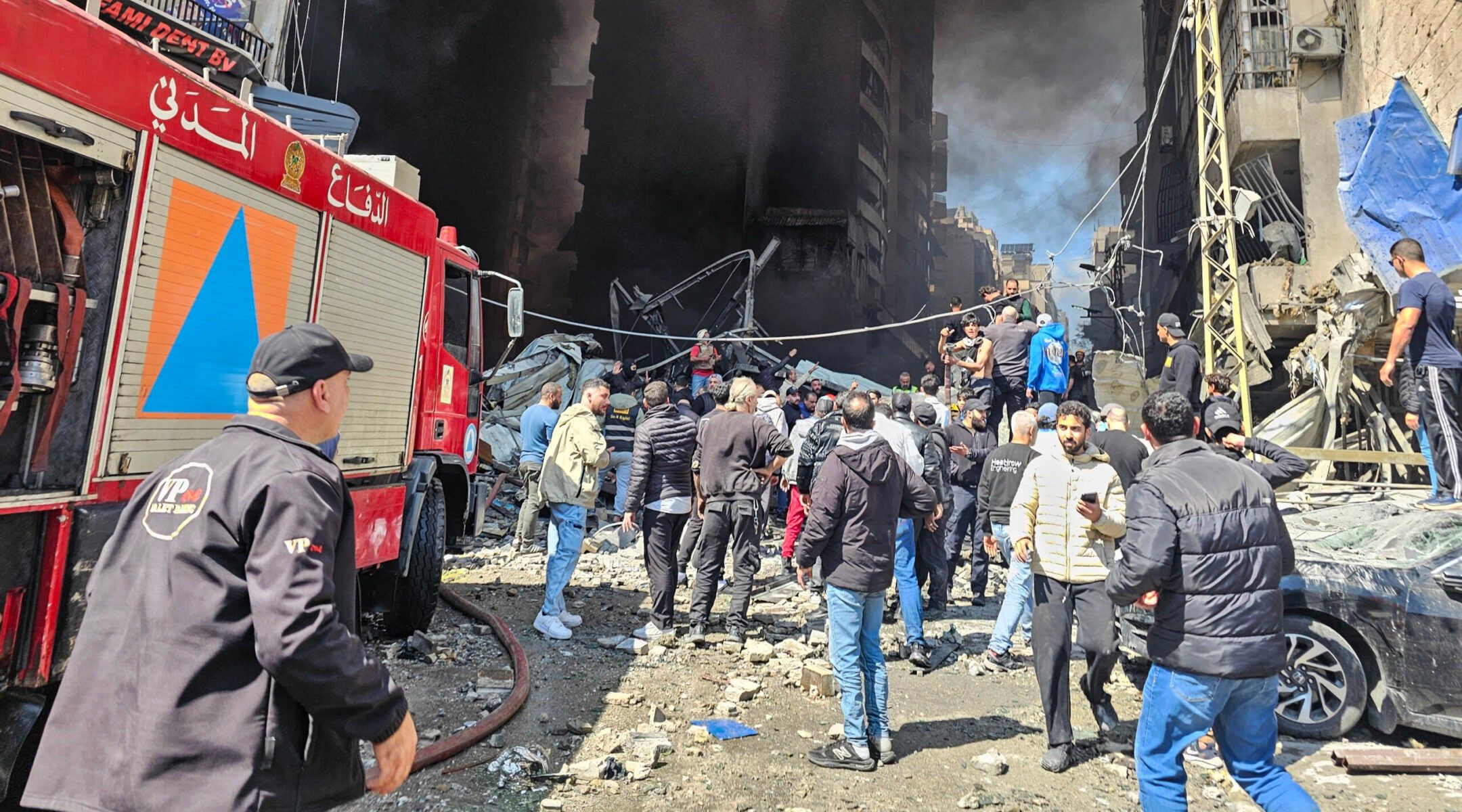
Fragile Calm in the Middle East?
Reports have surfaced detailing a delicate, two-week ceasefire agreement between the United States and Iran, aimed at curbing escalating tensions across the Middle East. The agreement, described by sources as 'fragile,' seeks to halt, at least temporarily, the surge in attacks by Iranian-backed militias in Iraq and Syria against American forces. While any de-escalation is welcomed, the critical question for Israel is whether this agreement extends to Lebanon, where the Iranian proxy Hezbollah continues its aggressive posture.
The impetus for this ceasefire reportedly stems from a series of increasingly brazen attacks on US military personnel stationed in the region. For months, these attacks, often carried out by groups linked to Iran's Islamic Revolutionary Guard Corps (IRGC), have threatened to draw the United States into a wider conflict. The Biden administration, keen to avoid a full-blown war in the Middle East, has pursued diplomatic channels to rein in Iran's destabilizing activities. This ceasefire is seen as a product of those efforts, a tentative step towards a more stable, albeit uncertain, regional environment.
Israel's Cautious Stance
However, Jerusalem views the situation with considerable skepticism. Official sources within the Israeli government have indicated that this US-Iran agreement, whatever its merits, does not encompass Lebanon. This means that Hezbollah, the powerful Iranian-backed Shiite militia that dominates southern Lebanon, remains free to continue its provocations along Israel's northern border. This is a point of grave concern for Israel, which has repeatedly warned against Hezbollah's growing arsenal of advanced weaponry and its increasingly aggressive rhetoric.
“This deal does not extend to Lebanon,” a high-ranking Israeli official stated, emphasizing the limited scope of the agreement. This statement underscores Israel's determination to act independently to safeguard its security interests, regardless of any broader US-Iran understanding. The shadow of the Second Lebanon War in 2006 looms large, reminding Israelis of the devastating consequences of allowing Hezbollah to build up its military capabilities unchecked.
Furthermore, Israeli security analysts point out that even if the ceasefire holds in Iraq and Syria, it does little to address the fundamental issues fueling regional instability. Iran's support for terrorist groups, its pursuit of nuclear weapons, and its expansionist ambitions remain significant threats to Israel and the wider region. A temporary pause in attacks does not alter these underlying realities.
Hezbollah's Enduring Threat
Hezbollah's presence in Lebanon poses a multifaceted threat to Israel. The group's estimated arsenal of over 150,000 rockets and missiles, many of them capable of reaching deep into Israeli territory, represents a clear and present danger. Beyond its military capabilities, Hezbollah also exerts considerable political influence within Lebanon, effectively operating as a state within a state. This allows Iran to project its power directly onto Israel's northern border, creating a constant source of tension and potential conflict.
Adding to the concern, Hezbollah has been actively involved in entrenching itself in Southern Syria, near the Israeli border, and is believed to be working closely with Iran to smuggle advanced weaponry into Lebanon. This includes precision-guided missiles, which would significantly enhance Hezbollah's ability to strike strategic targets within Israel. The IDF has repeatedly stated its readiness to act to prevent the transfer of such weapons, even if it means violating Lebanese sovereignty. In 2023, the IDF reported conducting over 200 strikes against Hezbollah targets in Syria, underscoring the scale of the threat.
In recent years, Hezbollah has also increased its efforts to establish a presence in the Golan Heights, further complicating the security landscape. This region, which Israel captured from Syria in the 1967 Six-Day War, is of strategic importance, and any attempt by Hezbollah to gain a foothold there is viewed as a direct challenge to Israeli sovereignty. According to a 2022 report by the Alma Research and Education Center, Hezbollah has established at least 30 outposts in the Golan Heights, operating under the guise of civilian organizations.
The Nuclear Question Looms
The US-Iran ceasefire also raises questions about the ongoing negotiations surrounding Iran's nuclear program. While the agreement may provide a temporary respite from regional tensions, it does not address the core issue of Iran's pursuit of nuclear weapons. Israel has consistently maintained that it will not allow Iran to acquire nuclear weapons, viewing such a development as an existential threat.
The International Atomic Energy Agency (IAEA) has repeatedly raised concerns about Iran's lack of transparency regarding its nuclear activities. In a recent report, the IAEA stated that it was unable to verify the peaceful nature of Iran's nuclear program due to Tehran's failure to fully cooperate with inspectors. This lack of transparency further fuels Israel's concerns about Iran's intentions.
Prime Minister Netanyahu has made it clear that Israel reserves the right to act unilaterally to prevent Iran from acquiring nuclear weapons, even if it means defying the international community. This stance reflects Israel's unwavering commitment to its own security and its deep distrust of the Iranian regime. The Israeli Air Force has conducted numerous exercises simulating strikes against Iranian nuclear facilities, signaling its readiness to act if necessary.
The Economic Dimension
Beyond the immediate security threats, Israel also views Iran's actions through an economic lens. Iran's support for terrorist groups and its destabilizing activities in the region have a significant impact on the Israeli economy. The constant threat of attack forces Israel to invest heavily in defense, diverting resources away from other sectors. Furthermore, regional instability discourages foreign investment and tourism, hindering economic growth.
The Abraham Accords, which normalized relations between Israel and several Arab countries, have opened up new opportunities for economic cooperation and trade. However, Iran's attempts to undermine these agreements pose a threat to this emerging regional economic order. Iran views the Abraham Accords as a challenge to its influence in the region and has actively sought to disrupt them through various means, including supporting terrorist groups and spreading propaganda.
Looking Ahead
While the US-Iran ceasefire may offer a temporary reduction in tensions, it does not address the fundamental issues that drive conflict in the Middle East. Israel remains vigilant, particularly regarding Hezbollah's activities in Lebanon and Iran's pursuit of nuclear weapons. The Israeli government is committed to defending its security interests, even if it means acting independently of the international community. The coming weeks and months will be critical in determining whether this fragile ceasefire can pave the way for a more lasting peace or whether it will simply be a prelude to further escalation.
Ultimately, Israel's security depends on its own strength and its ability to deter potential adversaries. The IDF remains on high alert, ready to respond to any threat, from any direction. The Israeli government is also actively working to strengthen its alliances with other countries in the region and beyond, building a coalition to counter Iran's destabilizing influence.
The path to peace in the Middle East is long and arduous, but Israel remains committed to pursuing a future of security and prosperity for its citizens. This requires a combination of diplomacy, deterrence, and a willingness to defend itself against any threat. The US-Iran ceasefire is a small step in a complex and challenging environment, but it is essential to remain vigilant and focused on the long-term goal of a more peaceful and stable region. In 2022 alone, Israel's defense spending amounted to approximately 5.6% of its GDP, showcasing the nation's commitment to security in the face of constant threats. The Israel Missile Defense Organization (IMDO), in partnership with the U.S. Missile Defense Agency (MDA), continues to develop and enhance systems like Iron Dome and David's Sling, investing over $2.5 billion in these projects to safeguard the nation from rocket and missile attacks.
For more incisive coverage, visit IsraFan for daily updates.