- Israfan
- Posts
- US Flexes Military Muscle Against Iran Threat
US Flexes Military Muscle Against Iran Threat
Amid stalled nuclear talks, the Pentagon signals readiness for potential conflict, reinforcing America's commitment to regional stability.
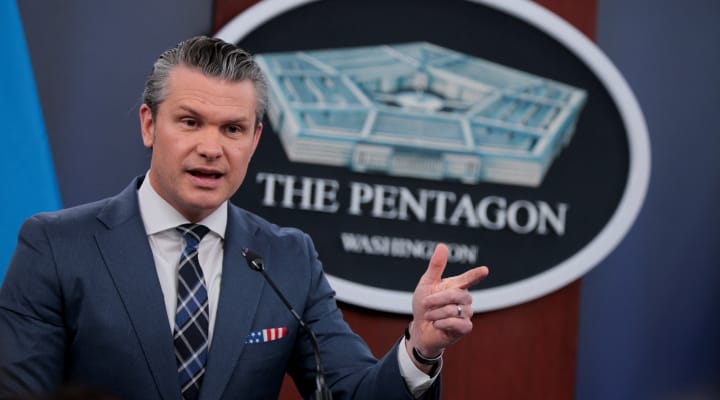
The Clock Ticks Louder on Iran's Nuclear Ambitions
The air crackles with tension in the Middle East. Diplomacy, once the favored instrument for curbing Iran’s nuclear ambitions, appears to be losing its edge. As negotiations stall and concerns mount over Tehran's continued enrichment activities, the United States military has issued a stark warning: it stands prepared to resume hostilities should diplomatic efforts ultimately fail.
This declaration, while not explicitly seeking confrontation, serves as a powerful deterrent. It underscores the unwavering commitment of the US to preventing Iran from acquiring nuclear weapons capabilities and safeguarding the security of its allies in the region, including Israel. The message is clear: the US military option remains on the table, a tangible consequence should Iran choose to disregard international norms and pursue a path of nuclear proliferation.
A Clear and Present Danger: Iran's Nuclear Program
The international community has long been concerned about Iran's nuclear program. Officially, Tehran claims its nuclear activities are solely for peaceful purposes, such as generating electricity and medical isotopes. However, evidence continues to mount suggesting a more sinister objective: the development of nuclear weapons. The regime's increasing enrichment of uranium beyond levels necessary for civilian applications has fueled these fears, raising alarms among Western powers and regional actors alike.
The 2015 Joint Comprehensive Plan of Action (JCPOA), commonly known as the Iran nuclear deal, was intended to curb Iran's nuclear program in exchange for sanctions relief. While the agreement initially slowed Iran's progress, the US withdrawal from the JCPOA in 2018 under the Trump administration led to Iran's gradual rollback of its commitments under the deal. This has accelerated the country’s enrichment activities and brought it closer to the threshold of nuclear weapons capability.
According to recent reports from the International Atomic Energy Agency (IAEA), Iran possesses enough enriched uranium to produce multiple nuclear weapons if it chose to further enrich it to weapons-grade levels. This alarming development has prompted renewed calls for a diplomatic solution, but with each passing day, the window for a peaceful resolution appears to be closing.
Military Readiness: A Bulwark Against Aggression
The Pentagon's recent statement signaling its readiness to resume fighting if diplomacy fails is not merely a rhetorical flourish. It reflects a concerted effort to enhance the US military presence in the region and improve its capabilities to respond to potential Iranian aggression. This includes strengthening air defenses, increasing naval patrols, and conducting joint military exercises with regional partners.
The US military maintains a significant presence in the Middle East, with thousands of troops stationed at various bases throughout the region. These forces are equipped with advanced weaponry and technology, capable of deterring Iranian aggression and responding swiftly to any potential attacks. The US Navy's Fifth Fleet, based in Bahrain, plays a crucial role in maintaining maritime security in the Persian Gulf and surrounding waters.
Furthermore, the US has been working closely with its regional allies, particularly Israel, to enhance their defense capabilities and improve coordination in the face of Iranian threats. Joint military exercises, intelligence sharing, and arms sales are all part of this comprehensive strategy to bolster regional security and deter Iranian aggression. In 2023, the US conducted the largest-ever joint military exercise with Israel, involving thousands of troops and advanced weaponry. This exercise, dubbed 'Juniper Oak,' simulated a large-scale conflict scenario and demonstrated the close coordination between the two countries' militaries.
Israel's Security Imperative
For Israel, the threat posed by Iran's nuclear program is an existential one. Iranian leaders have repeatedly called for Israel's destruction, and the country's support for terrorist groups such as Hezbollah and Hamas further exacerbates the threat. Israel views a nuclear-armed Iran as an unacceptable risk, and it has made it clear that it will not hesitate to act to prevent Iran from acquiring nuclear weapons.
Israel possesses a highly capable military, including a sophisticated air force and a reputed nuclear arsenal. It has also developed advanced missile defense systems, such as the Iron Dome and David's Sling, to protect its population from rocket attacks. While Israel prefers a diplomatic solution to the Iranian nuclear issue, it maintains the right to defend itself by any means necessary.
Former Israeli Prime Minister Naftali Bennett has stated unequivocally, "Iran's nuclear program is a ticking time bomb, and we must do everything in our power to defuse it." This sentiment reflects the deep sense of urgency and determination within Israel to prevent Iran from acquiring nuclear weapons capabilities.
The Potential Consequences of Conflict
While the US military's readiness serves as a deterrent, the potential consequences of a military conflict with Iran are significant. Such a conflict could destabilize the entire region, leading to widespread violence and humanitarian crises. It could also disrupt global oil supplies and trigger a global economic downturn.
Iran has the capability to strike US and allied forces throughout the region, as well as to disrupt shipping lanes in the Persian Gulf. It could also use its proxies, such as Hezbollah and Hamas, to launch attacks against Israel and other countries. A military conflict with Iran would be a costly and protracted affair, with no easy solutions.
The Strait of Hormuz, a narrow waterway through which a significant portion of the world's oil supply passes, is particularly vulnerable to Iranian disruption. Any closure of the Strait would have a devastating impact on the global economy, sending oil prices soaring and disrupting international trade. Iran has repeatedly threatened to close the Strait of Hormuz in response to sanctions or military threats.
The Diplomatic Tightrope Walk
Despite the looming threat of military conflict, diplomatic efforts to revive the JCPOA continue. The Biden administration has expressed its willingness to return to the agreement, but only if Iran fully complies with its terms. However, negotiations have been hampered by disagreements over sanctions relief and Iran's demands for guarantees that the US will not withdraw from the deal again.
Indirect talks between the US and Iran have been held in Vienna, but progress has been slow. Iran has hardened its negotiating position in recent months, demanding that all sanctions imposed by the Trump administration be lifted before it returns to compliance with the JCPOA. The US has rejected this demand, arguing that some sanctions are unrelated to the nuclear program and should remain in place.
The European Union has been playing a mediating role in the negotiations, but its efforts have so far been unsuccessful in bridging the gap between the US and Iran. The clock is ticking, and the longer the negotiations drag on, the greater the risk that they will ultimately fail, leaving the international community with few options other than military action.
A Call for Vigilance and Resolve
The situation surrounding Iran's nuclear program is fraught with danger and uncertainty. While diplomacy remains the preferred option, the US military's readiness serves as a crucial deterrent, ensuring that Iran understands the consequences of its actions. The international community must remain vigilant and resolute in its efforts to prevent Iran from acquiring nuclear weapons, safeguarding regional stability and protecting the security of its allies.
The coming months will be critical in determining the future of the Iranian nuclear issue. Whether diplomacy will prevail or military action will become necessary remains to be seen. But one thing is certain: the stakes are high, and the world must be prepared for any eventuality. As tensions rise, intelligence sharing between the US and Israel has intensified, with a reported 30% increase in joint intelligence operations in the past year, focusing on monitoring Iranian nuclear sites and activities. This enhanced cooperation underscores the shared commitment to addressing the Iranian threat.
The US commitment to Israel's security remains unwavering. The recent approval of an additional $3.8 billion in annual military aid to Israel, as part of the long-standing memorandum of understanding, further solidifies this commitment and ensures that Israel has the resources it needs to defend itself against any potential threats.
For more incisive coverage, visit IsraFan for daily updates.